Private bank investment chiefs tackle debt, demographics and deglobalisation
Elisa Battaglia Trovato

As 2026 begins, markets are digesting a surprise geopolitical jolt with the audacious US-led seizure and imprisonment of Venezuelan President Nicolás Maduro, a move that challenges assumptions about international law and raises broader questions about the global balance of power.
Yet, despite wars, trade tensions, inflation worries and political instability, markets proved unexpectedly resilient in 2025. The MSCI All Country World index rose more than 20 per cent to record highs, delivering a third consecutive year of double-digit returns. Gold jumped 60 per cent. Even bonds delivered positive, if more modest, returns.
“We are leaving a year where markets climbed a wall of worry,” says Michael Strobaek, global chief investment officer at Swiss private bank Lombard Odier in Geneva. “What ultimately mattered for returns was not geopolitics, but earnings growth, economic resilience and the direction of interest rates.”
The key question now is whether this momentum can last. Much recent optimism has been fuelled by artificial intelligence, boosting tech stocks and hopes of a productivity revival. But wealth managers are urging investors to look beyond US mega-cap tech names, highlighting global and income opportunities, along with hedging.
UBS has built its 2026 outlook around the idea of “escape velocity”, the point at which the global economy can overcome structural drags such as debt, demographics and deglobalisation.
“The question is whether AI, fiscal stimulus and looser monetary policy can help the global economy break free from the big problems we’ve all been worrying about — government debt, political uncertainty and lingering inflation, among them,” says Mark Haefele, CIO at UBS Global Wealth Management in Zurich.
Haefele expects broad-based gains across regions and sectors — from technology and healthcare to utilities and banking — supported by solid US growth, easing financial conditions and accommodating fiscal policy.
Beyond the AI trade
“AI and tech should remain drivers of global equity markets,” he says, warning of “bubble risks” and overconcentration. UBS forecasts global equities to rise another 15 per cent this year.
Haefele advises diversifying within and beyond AI, into semiconductors, infrastructure, applications, and other sectors. UBS backs three structural trends: AI, power and resources, and longevity.
Capex linked to AI has tripled in two years, he notes, but to sustain momentum, both investors and tech leaders must believe future demand will justify prior and further investment.
The next phase, he adds, will span both software and hardware: “We think new waves of demand will come from agentic AI, where AI agents replicate part of the role played by knowledge workers, and from physical AI, such as robots and autonomous vehicles.”
Equities continue to rise
UBS forecasts global equities to rise another 15 per cent in 2026 and it suggests investors allocate up to 30 per cent of equity portfolios to structural growth themes like AI, energy and longevity
If these trends play out, UBS believes the $2.4tn already earmarked for AI-related capital expenditure could almost double to $4.7tn by 2030.
But powering that growth will require massive expansion in energy infrastructure. “AI needs vast amounts of electricity and resources,” Haefele says, pointing to grid upgrades, renewables and critical materials.
Healthcare innovation is also gaining ground, driven by ageing populations. “From obesity drugs and oncology to precision medicine and medical devices, demand for longer, healthier lives is reshaping the healthcare sector,” says Haefele.
UBS suggests investors allocate up to 30 per cent of equity portfolios to structural growth themes like AI, energy and longevity.
Private markets may offer early-stage exposure not yet priced into public markets, Haefele notes.
Risks to watch
Still, the path is far from risk-free. UBS highlights “setbacks in AI, renewed inflation, tense US-China relations, and rising government debt”, among the biggest threats.
Despite strong investment flows into AI, Haefele concedes, significant revenue generation is still definitely “a way away”.
He sees parallels with the dotcom boom, but also stark differences. “Back then, we believed we lived in a market economy. Today, since Covid, price discovery has to a large degree gone out the window.”
China illustrates the challenge. After seeing DeepSeek gain traction, UBS increased exposure to Chinese tech stocks, encouraged by signs of state support.
But given current valuations, it does not take much to trigger declines, Haefele warns, pointing to power constraints and overcapacity. Still, investment is rising as clients see cost savings, with agentic AI yet to truly begin.
US inflation has proved sticky, but Paul Donovan, chief economist at UBS, expects it to peak in the second quarter of 2026, paving the way for the Federal Reserve to cut rates “a couple of times”.
The longer‑term concern is fiscal, Donovan adds. Government debt in advanced economies is set to reach 125 per cent of GDP, according to the IMF.
While not an immediate crisis, he warns that rising public borrowing may increasingly target private wealth, via taxes, regulations, or yield controls.
In this environment, diversification and hedging remain essential. “We think quality bonds still play a role in portfolios and so does gold,” Haefele says.
Spreading bets
At HSBC Global Private Banking and Wealth, global CIO Willem Sels shares a broadly constructive outlook on risk assets but is urging investors to be cautious of overexposure.
HSBC’s investment strategy rests on four priorities: rethinking equity exposure, protecting against volatility, strengthening income streams and unlocking diversification through Asia.
The bank continues to back the long-term potential of AI, with the US leading adoption, but warns that volatility is likely to persist. “We all expect uptake across industries,” says Sels. “The question is how much, and how fast. Even a small delay could push earnings out.”
High valuations and uncertainty have prompted HSBC to broaden its positioning.
Within equities, it is expanding beyond core AI holdings to sectors with strong earnings prospects. The bank remains overweight technology and telecoms, but is also backing industrials, financials and utilities. “Tech and telecom are growth-style sectors,” says Sels. “But you also want exposure to value style sectors, such as financials and industrials.”
Unlike the late-1990s tech boom, Sels argues that recent equity gains have been grounded in fundamentals. “Nearly all of the rise in US market value has come from earnings growth rather than multiple expansion, and we expect that trend to continue,” he says. “That’s why we don’t think the US is in a bubble.”
HSBC’s four priority actions for 2026
1. Look across and beyond AI for equity returns: entire AI ecosystem, financials, industrials, utilities, M&A
2. Manage market dips with alternatives and multi-asset strategies
3. Unleash the power of income for portfolio strength: IG and EM bonds, infrastructure
4. Capture diversification opportunities from Asia’s innovation and income: Asian innovation leaders, high dividend stocks, quality bonds
Source: HSBC – Q1 2026 investment outlook - Resilience in a transforming world
Even so, with US equities now accounting for 65 per cent of global market exposure, HSBC has trimmed its overweight position and is increasing diversification, particularly into Asia, along with quality bonds, gold and hedge funds.
Alternatives and multi-asset strategies form a key part of its approach to managing downside risk. “Across the AI spectrum, there will be both winners and losers,” says Sels. “That’s one reason we’ve increased our use of hedge funds, especially after the recent rally.”
Other tools include dynamic allocation and exposure to less correlated return sources. “None of the assets we like are perfect diversifiers,” he adds. “So, diversify your diversifiers. There’s no single silver bullet.”
Income generation remains central to HSBC’s strategy. With rate cuts on the horizon, the bank favours investment-grade credit and emerging market bonds, both hard and local currency, for their yield and diversification benefits. It also sees value in infrastructure assets.
The bank remains underweight high yield instruments. “We would rather be in investment grade credit,” says Sels. “We don’t think investors are adequately compensated in high yield.”
Asia back in focus
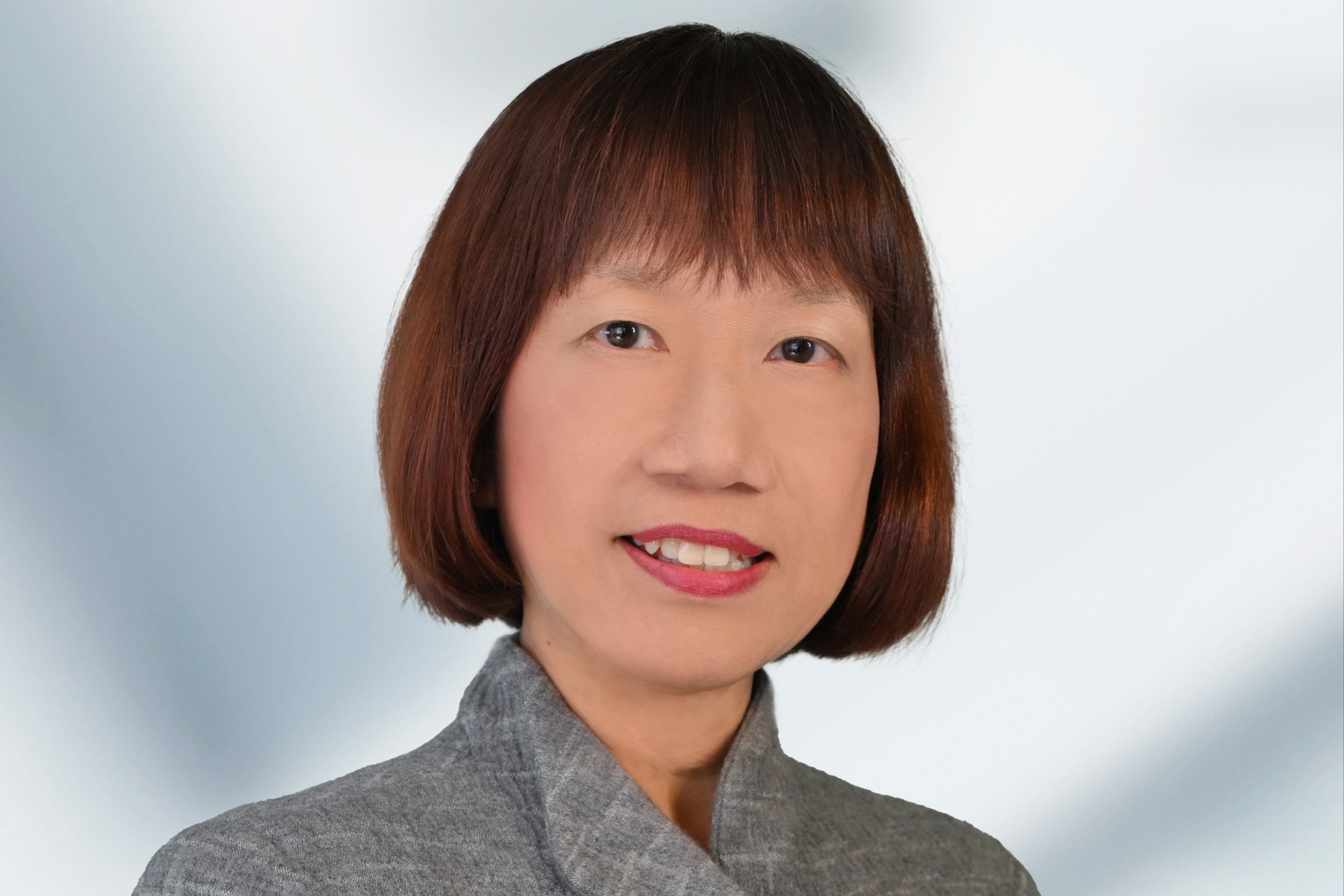
Asia sits at the heart of HSBC’s strategy. “Asia is the world’s technology hardware powerhouse, the largest consumer base and the biggest manufacturer,” says Cheuk Wan Fan, CIO, Asia at HSBC Private Bank and Premier Wealth.
The bank remains positive on mainland China, Japan and South Korea, while favouring Hong Kong and Singapore for their attractive valuations and high dividend yields.
A “barbell” approach is in play, balancing innovation leaders with high-dividend stocks and quality bonds. “We believe Asian innovation leaders will be the key beneficiary of the ongoing global AI investment boom,” says Fan. The region’s data centre capacity is expected to grow 13 per cent annually through to 2030, outpacing both the US and Europe.
Rising dividend yields and underweight investor positioning add to the region’s appeal.
HSBC forecasts Asia ex-Japan earnings growth of 20 per cent this year, with China above 15 per cent, while valuations remain attractive. “Governance reforms across the region are starting to translate into meaningful value creation, while Asia’s credit market offers a diverse and resilient income stream,” says Fan.
Europe, by contrast, is losing ground. Although European equities outperformed US markets in 2025 for the first time in years, sentiment has cooled. “Investors had FOMO about the US again,” says Sels. “That characteristic tilt towards Europe faded.” Delays in Germany’s fiscal stimulus and strong US growth have pulled capital back.
A Ukraine peace deal, while still distant, could lift sentiment and oil prices, he says, but Europe lacks a clear near-term catalyst. “Most of our clients are either neutral or even underweight in Europe,” Sels adds.
Emerging markets’ turning point
Lombard Odier is positioning for a rebound in emerging markets, after years of underperformance and investor scepticism. “Investors really should begin diversifying into emerging markets now,” says Strobaek. “This is one of our core beliefs.”
The case goes beyond low valuations. “Emerging markets are not just cheaper, they are fundamentally more attractive,” he says. Many are further along in the rate-cutting cycle and have stronger fiscal dynamics than their developed peers. A weaker dollar could also offer tailwinds. In an increasingly fragmented global economy, Strobaek says, the “Global South” is “finding its own footing”.

Lombard Odier remains pro-risk, betting that the current bull market “still has legs to go”. AI-driven earnings growth among large-cap tech stocks with healthy balance sheets sets this cycle apart from the dotcom boom, he argues.
Still, risks abound, from infrastructure bottlenecks to power constraints and funding gaps, although US‑China rivalry is likely to sustain investment. “Whoever dominates tech and AI will be the most productive economic power,” Strobaek says.
Diversification remains vital. The firm is adding exposure across European markets, gold, and emerging markets assets spanning equities, bonds and currencies.
Gold continues to serve a “dual role” in portfolios, states Strobaek. “We don’t think the pace of returns is sustainable, but in a world of falling yields and geopolitical uncertainty, it remains a good hedge against growth and inflation surprises.”
Fixed income played a stabilising role in 2025 and is expected to do so again. “Assets will be driven more by the coupon side, rather than yields falling much further,” Strobaek says.
He favours UK gilts, convertible bonds, and hard-currency emerging market debt, especially in Latin America and Asia. “To the surprise of many, we actually like gilts,” he adds, citing attractive yields and the potential for rate cuts.
While 2026 may not deliver the double-digit equity gains of recent years, few expect a retreat. AI continues to transform industries, but investors are being urged to look past headlines. Broader equity exposure, income strategies and global diversification are becoming critical.
“The most dangerous thing is too much volatility, because clients sell at exactly the wrong moment,” says Sels. “That’s why the key is building resilience into portfolios, to stay exposed to that exciting transformation.”