Ukraine war remains key to Europe’s future prospects
Yuri Bender

As the late afternoon air-raid sirens interrupted the autumnal Saturday strolls of couples along Khreshchatyk, the main thoroughfare dissecting downtown Kyiv, European and US leaders gathered close by, in a reinforced hotel basement in the shadow of the 11th century St Sophia’s Cathedral. Their public discussions, and side meetings with military strategists, were all about helping Ukraine repel the Russian invasion.
Among these international speakers at the annual YES conference, organised each September by Victor Pinchuk — Ukraine’s best known industrialist turned philanthropist — were US presidential envoy General Keith Kellogg, UK foreign secretary Yvette Cooper, Polish foreign minister Radoslaw Sikorski, Finnish President Alexander Stubb, and an impressive array of diplomats, all personally greeted by Ukrainian President Volodymyr Zelenskyy.
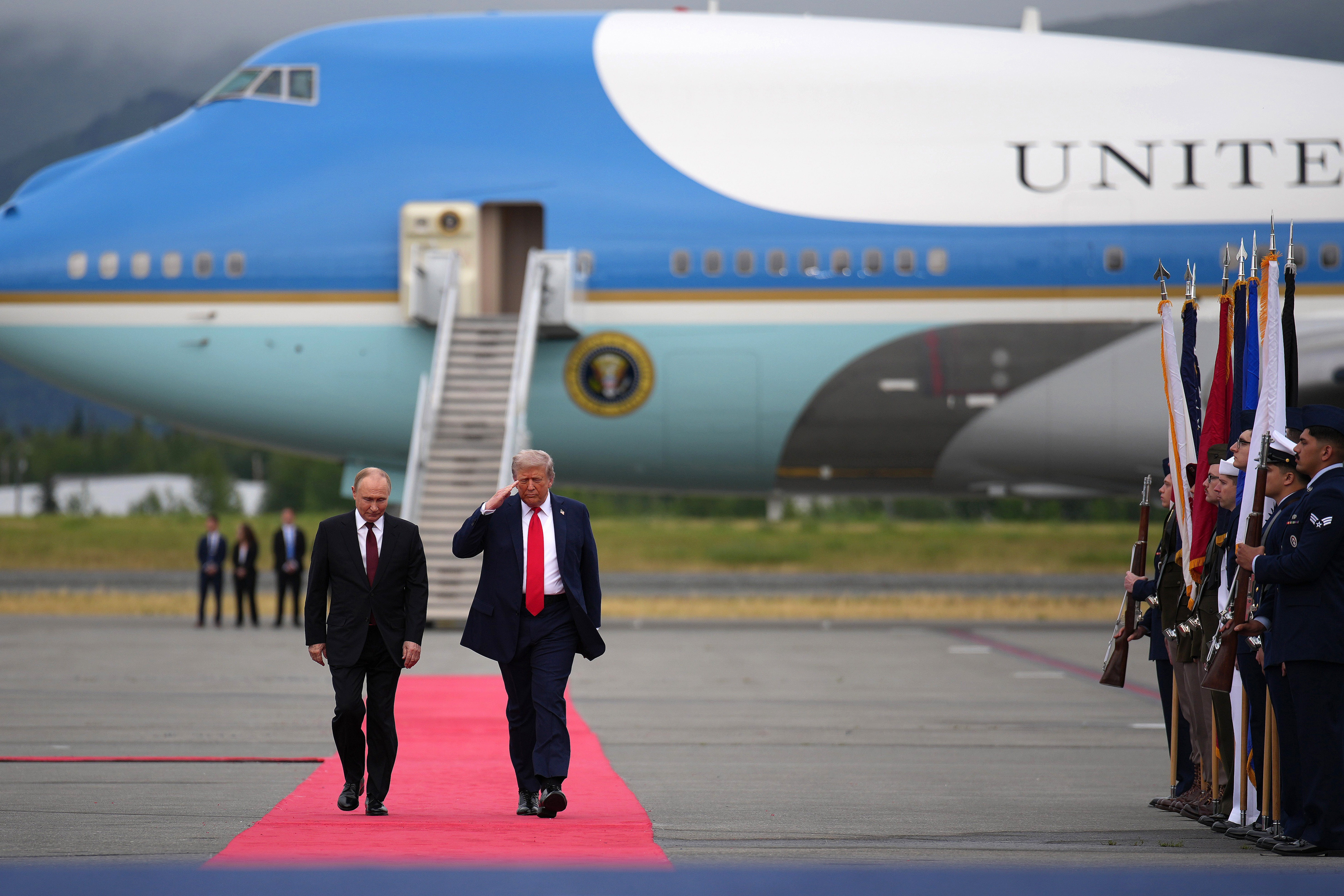
Residents of the war-ravaged country’s historic capital — founded in CE482 — mostly welcomed the gaggle of foreign dignitaries, with the hope they would provide weapons to help reinforce Ukraine’s three-and-a-half-year defence of the frontline on the eastern steppeland of Donbas. But most also expressed a sense of frustration and incredulity, asking: why should our fate be determined by the whims of US President Donald Trump, who recently lavished Russian president and Ukraine’s invader Vladimir Putin, with red carpet hospitality in Alaska?
With a constant parade of foreign politicians and diplomats shuttling in and out of Kyiv, there is a palpable sense in the cobble-laned city that it lies at the crossroads of contemporary geopolitical machinations.
Most of the speakers at the YES forum, including the US envoy and the Ukrainian president agreed on two things. Firstly, they feel that China can have a key influence on the halting the war in Ukraine, through its vast economic influence on a Russian economy increasingly dependent on trading with Beijing.
Secondly, they believe the future of the European continent — with Ukraine at its geographical centre — no longer depends on US patronage, but the vision and organisation of the European Union.
Continental questions
“Today Nato has been downgraded,” says Vadym Karasyov, former political adviser to Victor Yushchenko, who survived poisoning and a rigged election to end up as victorious presidential candidate after the 2004 Orange Revolution. “What will now be the identity and vision of the European continent in an era where it is no longer backed by the US? This is the key question for European elites.”
The fate of Ukraine and the European Union are intimately intertwined, believes the school of political and economic commentators represented by Mr Karasyov. “Ukraine is now Europe’s main concern,” he says, speaking in a wide-ranging interview with PWM in Kyiv.
“Ursula Von der Leyen, representing the European elite, says her job is now to provide money for Ukraine. But [Friedrich] Merz, [Keir] Starmer and [Emmanuel] Macron, the new European leaders, have yet to formulate their policy on what victory might mean for Ukraine and Europe. What will Europe look like now and how can they co-ordinate it?”
Asset managers and the consultants they work with are asking similar questions, as they continue to debate major portfolio re-allocations with family office clients. Although most have concerns about Europe’s lack of cohesion and definitive strategy for growth, they are at least equally sceptical about longer-term prospects for the US under the unpredictable and chaotic leadership of President Trump.
Beat Wittmann, partner at Zurich-based wealth manager Porta Advisors, and former senior banker at Credit Suisse, UBS and Julius Baer, is suggesting his clients favour a long-term shift away from “unreliable and isolationist” US interests, as the geopolitical order is redrawn.
“The US president is expected to continue his erratic trade policies, marked by unpredictable tariffs,” writes Mr Wittmann in a note to clients. Like many players at the heart of Europe, he is disappointed by an EU which “remains too disunited to leverage its economic weight”.
An ongoing US assault on multilateral trade institutions, risks of dollar depreciation from declining interest rate differentials, a weakening fiscal position, and frequent weaponisation of the US dollar has led Mr Wittmann to instruct clients to “prioritise assets within one’s own geographic region and reference currency”.
This call will have particular consequences for European investors, most of whose portfolios have long been dominated by exposure to a handful of US tech stocks. Despite the “fragmented and hesitant” nature of Europe, he is bullish on the fortunes of the continent’s equity markets, driven by earnings, capital flows and growth prospects.
“Attractive valuations, supported by unprecedented European investment in defence, industry, technology, and critical infrastructure, provide a positive outlook,” suggests Mr Wittmann. “Equities, as leading indicators, suggest continued outperformance in finance, defence, industry, and technology sectors.”
Flashing red lights
Constant personal sniping from the White House against the US Federal Reserve Board of Governors, to pressurise them into lowering interest rates, is seen by many players as another red light flashing for investors in American assets.
“This is another example of Trump trying to maximise US power and his personal power and in a way achieving the opposite,” says Anna Rosenberg, head of geopolitics at the Amundi Research Institute, responsible for helping investors reach asset allocation decisions, in a video interview with PWM. Mr Trump’s interference in the work of domestic agencies, she says, is damaging trust in institutions, which are essentially the most valuable part of the American investment ecosystem.
“Political interference is eroding the biggest asset the US has, which is its dominance in the financial system and the dollar,” says Ms Rosenberg. “So you keep on losing faith. Investors are diversifying their dollar holdings into gold and to other jurisdictions, and that will accelerate.”
Political interference is eroding the biggest asset the US has, which is its dominance in the financial system and the dollar
Louise Tumchewics, a visiting fellow and lecturer in war studies at the University of Southern Denmark and consultant on supply chains to financial institutions, says these developments have led her to the conclusion that it would now be wrong to recommend US investments to her clients.
“Executive overreach — including dismantling and reorganising federal agencies, dismissing independent civil servants, and defying congressional authority — disregards legal precedent and challenges the constitutional boundaries of the president,” she says.
Moreover, Ms Tumchewics believes considerable volatility in American foreign and economic policy over the past eight months “has confused and disappointed allies and trade partners such as Canada and the EU”. This has encouraged rising powers such as India to pursue alternative relationships with other Brics nations, instead of the US.
Reshaping allocations
Not only are investors becoming more cautious about US investments, but they are making active calculations about risk management, leading them to drastically reshape long-term allocations, believes Arnab Das, senior macro strategist at US fund manager Invesco.
“Radical, US-led changes in domestic and global institutions are making the country a riskier investment at a time of stretched valuations and heavy portfolio concentration, when other major economies are not fully offsetting the downsides to US macro and financial performance,” says Mr Das. As a result, he recommends family offices and high net worth clients should shift some allocations into “other major economies to reduce concentration risk”.
Many wealthy investors, who have been “riding the rodeo of US tech”, are now rebalancing long-term portfolios, says Elizabeth Hart, founder of Legacy Wealth Advisers in Singapore, managing money for families in Europe and Asia.
US equities can no longer give our clients the returns they need
The biggest risks for clients are now emanating from President Trump’s unpredictability, feeding into potential policy mistakes by the US Federal Reserve and geopolitical turmoil, she says. The latest meeting of her investment committee has downgraded annual return expectations for US markets from 4.8 to 2 per cent.
“Our conclusion is that US equities can no longer give our clients the returns they need,” warns Ms Hart, who recommends diversifying portfolios across Europe, Asia and emerging markets in general.
Sceptical investors
But while there are persuasive reasons to invest in the European defence industry to boost Ukraine’s battlefield fortunes, plus associated infrastructure projects, not all investors are convinced.
“The jury is out on the ability to take catalysts and translate them into productivity,” according to Nannette Hechler-Fayd’herbe, Zurich-based chief investment officer for Swiss bank Lombard Odier, speaking on a recent PWM panel on asset allocation. “This has been the biggest issue of the EU.”
Investors wary of risk should still maintain “sizeable exposure” to American markets, despite major trends suggesting re-allocation, believes Mr Das at Invesco. “The US will remain one of the world’s top largest and most dynamic economies and, financial and technology ecosystems,” believes Mr Das. “It remains the safest country from geopolitical threats — given the hemispheric protection of two oceans and the world’s leading military.”
A thematic reshape, in response to geopolitical trends, should also be considered, believe commentators. “What seems obvious in terms of investments is that the fight for AI leadership will be central in the coming years,” suggests Francois Savary, co-founder of Genvil, a Geneva-based wealth management and consulting firm, advocating that “tech leaders” should remain part of any US equity allocation.
He also expects the energy sphere to emerge as one of the pre-eminent investment focuses.
“The AI need for energy is not going to reduce, indeed far from it,” says Mr Savary.
“Despite the noise you have seen in the US over the last year or so, the US is still the deepest, most mature private equity market and it is a key component of any private equity portfolio,” says Charlotte Morris, co-lead manager of London-based private markets specialists Pantheon International. “If you have a global portfolio, it has to have a meaningful component in the US.”
Fragmented Europe
Europe currently represents more than 30 per cent of most alternative portfolios, she says. “It is much more fragmented, and you need to speak different languages, to understand local cultures, be networked in a number of different countries, to be able to operate in Europe and uncover interesting investment opportunities. And that is quite different from the US, which is much more of a collaborative single economy.”
Although Ms Morris remains reluctant to recommend any “fundamental long-term shift” in investment strategies between the US and Europe, she believes there are some “quite interesting opportunities, both in terms of the market environment and the pricing environment in Europe relative to the US”.
But unlike other players, she does not believe an inflection point has yet been reached. “I think it’s still too early to say that US exceptionalism is over and that fundamentally people should be long-term steering their capital away from the US. That’s a bet that I am not sure I would make right now.”
I think it’s still too early to say that US exceptionalism is over and that fundamentally people should be long-term steering their capital away from the US
Leading historians however, feel this is the moment to believe and invest in Europe. A panel of historians near the end of the YES conference in Kyiv agreed that the Europe which has begun to instigate major fiscal changes, particularly in Germany, should back these economic reforms with a concerted military strategy and direction. Such a move, they feel, will likely define the continent’s future.
Europeans, according to historian Timothy Snyder, “have sufficient economic power to help the Ukrainians win this war. It is historically strange that you have chosen not to convert it to political and military power.”
For both Europe and Ukraine, believe Mr Snyder and most of the diplomatic community regularly visiting war-torn Kyiv, the conflict with Russia presents an existential question.
“If Ukraine isn’t victorious in some broad sense,” he says, “that means that it’s unlikely that the European Union, in my view, is going to continue to exist.”