Investment firms seek to face down Trump threat
Yuri Bender

Leadership is once more in focus in wealth management. In a previous era, at the time of the Global Financial Crisis of 2008, banks and fund houses constructed products that were not appropriate to their client bases, sold them in bulk and then — with a few notable exceptions — refused to take responsibility when clients lost money in subsequent crashes.
Today’s spotlight on leadership does not relate to a major financial crisis, but more a broader moral crisis, amplified by US President Donald Trump’s denigration of collective institutions including the US Federal Reserve, the World Trade Organisation, the UN and Nato.
“The industry is in an invidious position. Privately, most of its members are President Trump’s harshest critics, but they also recognise that the Trump agenda was in his election manifesto and has been endorsed by US voters,” says Amin Rajan, CEO of the Create-Research consultancy advising asset and wealth managers.
“So, the industry has restrained itself from criticising Trump openly, while recognising that it will have to help clear up the mess when he is gone.”
For now, investment firms in the US are rallying round their president, fearing sanctions against their businesses, should they criticise their leader’s morals or policies.
The industry has restrained itself from criticising Trump openly, while recognising that it will have to help clear up the mess when he is gone
“The authorities are definitely overstepping their remit and interfering in business. But this is no different to the Biden administration, who were also persecuting their political enemies,” says the business boss at one major US equities house. “So yes, Trump is exceeding his authority, but so was Biden, and it would be double standards if we responded to one, but not the other.”
ESG clampdown
Most firms report a clampdown on both environmental, social and governance (ESG) investments, and diversity and inclusion policies. They have rowed back substantially from the celebratory and inclusive mood and cultures promoted during Black Lives Matter protests in 2020, when corporate bosses were desperate to make the correct cultural decisions, to keep both staff and clients onside.
“There is definitely a pushback from the authorities against ESG investments, but this depends on which state you are in,” adds the US business boss. “You are expected to work with ESG mandates in California, but not in Texas and states depending on oil and other fossil fuels.”
The huge backlash that large asset managers withstood on ESG issues in the US is indicative of a “harsh climate for asset managers”, believes Mr Rajan. “Even collective bodies like the Net Zero Alliance for Asset Managers had to backpedal in the face of hostility,” he says. “They believe that, at this stage, collective industry action will amount to no more than spitting in the wind, but the gloves will be off once signs of economic damage are evident.”
European firms with US business interests and investment exposure say we have entered “worrying times”, agreeing that collective action is needed, should they wish to make a stand.
“We can’t do this on our own. We need a collective approach, where investment firms get together and stand up to him,” ventured one European investment boss. “Otherwise, individually, we will all be victimised and punished.”
Several have called for a “forum” enabling an “initiative” allowing them to rally against edicts from the White House and economic policies which are a danger to the global economy and markets.
Powerful voices
“How can we carry the burden so that one firm does not get thrown under the bus?” asks a senior manager at a leading continental funds house. “It is tempting to blame Europe for being on the weak side. But the US will lose out big time, as there will be better autocracies than Trump and his buddies. This is a good wake-up call for Europe.”
At industry summits, powerful voices are increasingly calling on their ranks to face down Washington’s overbearing pressure to create a pro-Trump financial services bloc.
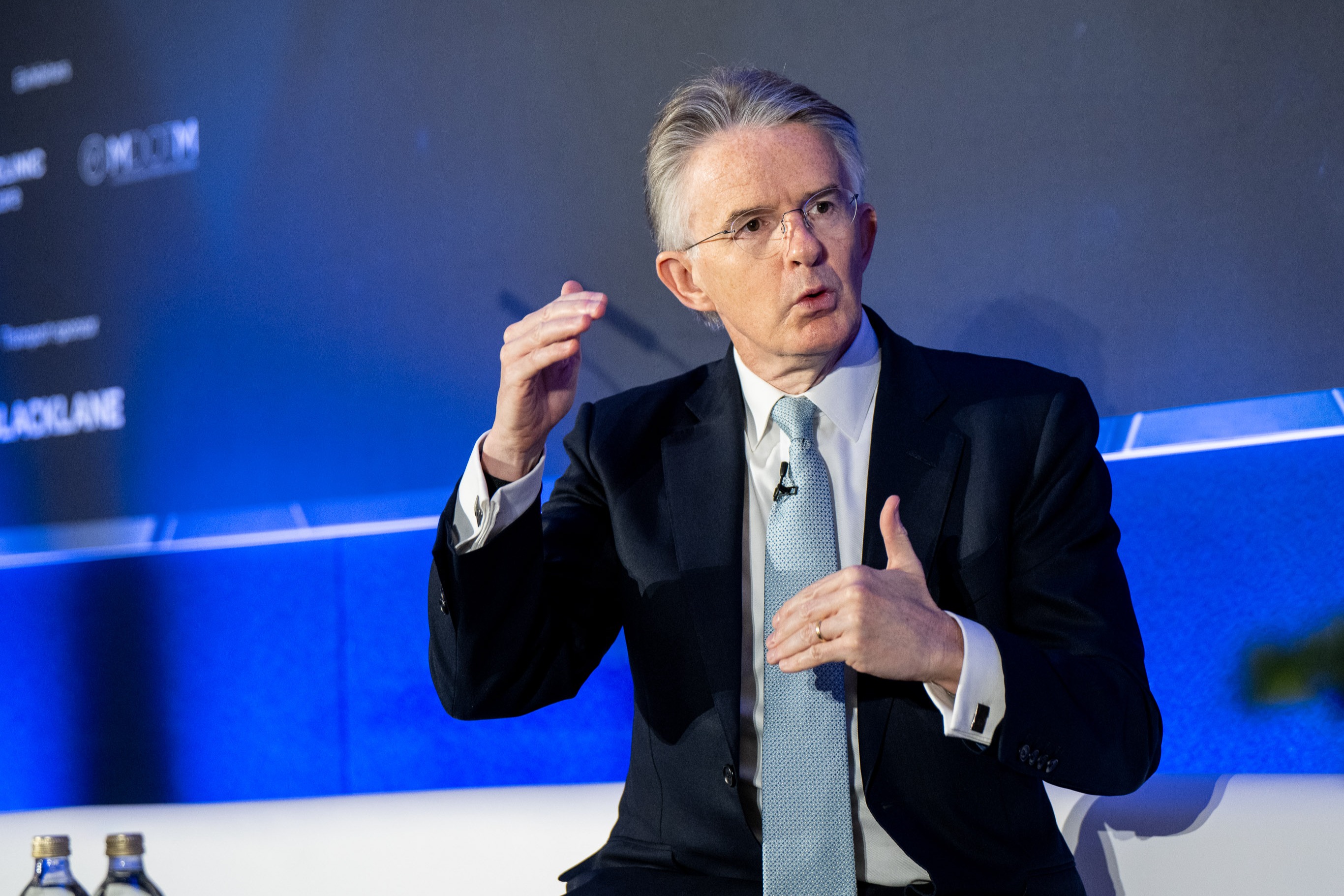
Speaking at the recent PWM Global Wealth Management Summit in London, John Flint, former CEO of the HSBC Group and National Wealth Fund, stunned delegates in his forthright criticism of US policies.
“The US has underwritten so much for so many countries for so long and is now an unreliable and unpredictable partner,” he said.
“I am frustrated and disappointed, watching the lack of leadership reaction to what we’ve seen in the US. But I get it. I can understand why people have chosen to remain quiet, because there’s not any upside,” he said, comparing the US president to a “playground bully” with whom corporate opponents prefer to avoid eye contact.
“If you lead a big, listed company, you’ve got fiduciary responsibilities to those shareholders, and you coming out swinging against the president, knowing that he’s likely to respond back and take 10 per cent off your market cap, you’ve failed in your fiduciary responsibilities.”
Red lines
But along with the privileges of a leadership position, including the salary and profile, investment bosses must fulfil moral responsibilities, and that includes putting “yourself in harm’s way”, believes Mr Flint.
“We all need to be having conversations now with our boards, with our families, about our red lines. What is the point at which we will say this is not acceptable? History is littered with bad actors,” he told the PWM conference.
“When things go terribly wrong, it’s nearly always because good people have stood by and enabled and allowed bad actors to continue. So it’s a difficult challenge for leaders in the corporate space. I completely understand that. I’ve sat in those seats. But I think we all need to be clear where our red lines are.”
Have those red lines already been crossed? “For me, yes. And you’re seeing individuals demonstrate courage,” he said, referring to the election of New York mayor Zohran Mamdani. “He’s put himself in harm’s way, metaphorically speaking and you’ve got to salute that kind of courage, because I think that’s needed. And it will be needed from the business community at times as well.”
A US consultant in the audience, representing several global wealth managers, agreed with Mr Flint’s view, speaking with PWM on an unattributed basis: “Everyone needs to stand up to Trump. Everything he is doing is chaotic and self-serving.”
Some commentators believe it is not too late for the policies and sentiments expressed by the US leadership to be eventually reversed. “President Trump has ruffled many feathers and before long he will meet his Waterloo,” suggests Mr Rajan at Create. “History shows that authoritarian leaders sow the seeds of their own downfall.”