Geopolitical storm leaves richly priced US assets at risk
By Beat Wittmann

As Europe is confronted with the hostile stances of presidents Donald Trump and Vladimir Putin, it may be time to re-address portfolio allocation biases.
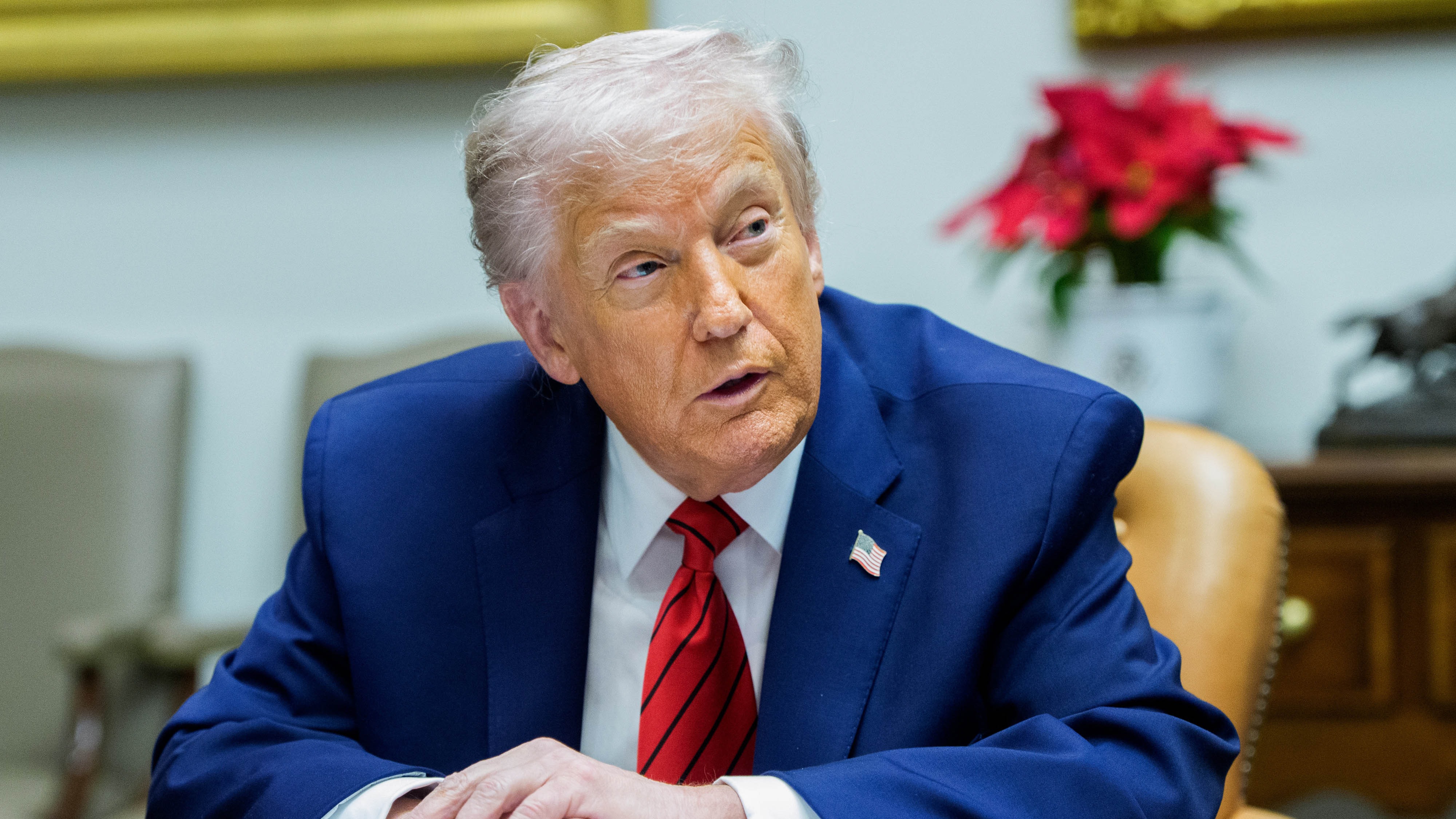
US president Donald Trump has abandoned not only multilateralism but the Western alliance, its principles and values. This should not come as a surprise. He has always been clear about his one and only focus — US power, deals and money.
The same goes for Russian leader Vladimir Putin, who is not seeking peace. Instead, he aims to turn Ukraine into a Belarus-type vassal state, amid Finlandisation of Russia’s eastern European neighbours.
Ukraine can only rely on future security guarantees through EU and Nato membership, providing military assets on the ground. As a last resort, Kyiv may consider nuclear re-armament.
For decades, Germany and much of Europe have relied on three pillars — imports of cheap energy from resource-rich Russia, exports of premium goods to growing China and reliance on the US nuclear umbrella and collective security from Nato. Within three years, ever since Russia’s unprovoked invasion of Ukraine, all three have collapsed.
For Europe, the last straw – a prelude to the verbal clash with Ukraine’s president Volodymyr Zelenskyy in Washington — was JD Vance’s speech at the Munich Security Conference. The US vice-president attacked European leaders, siding with Russia against Ukraine and openly supporting the far-right German AfD party against the German political establishment, shortly before German federal elections.
Capital markets in focus
With Mr Trump changing sides from the US’s traditional alliance partner of Europe to its long-term military enemy of Russia, the post-second world war transatlantic era has ended abruptly. Europe must step up, becoming self-sufficient in political, economic and security terms. Europe has all the capabilities and resources. What it lacks is political will to reform, to treat crisis as opportunity and invest to achieve much delayed strategic autonomy, focusing on defence, energy and finance.
Mr Trump has engaged in non-stop political warfare on three fronts simultaneously. He has undermined and usurped US institutions, sided with Russia against Ukraine and, as such, against Europe, and supported anti-EU far-right European leaders.
It is clear that Mr Trump wishes to test the limits of his presidential power, capital markets and the economy, plus the resilience of his financial backers. This begs the question of how much is too much.
The best way forward is to watch capital markets as leading indicators, particularly US government and corporate bonds, US equities and the US dollar. The signs are historically already on high alert as richly priced US equities and the dollar are at risk to follow falling US bond markets. Mr Trump’s highly erratic and inconsistent economic policy will eventually damage US growth, triggering business, investors and consumer confidence to plunge.
A contrasting picture is emerging in Europe. Germany has held peaceful and fair elections with record vote participation of 84 per cent. The conservatives (CDU/CSU) won the elections and their leader, Friedrich Merz, is designated chancellor, expected to form a coalition government, most likely, in collaboration with the social-democrats (SPD).
The biggest gains, however, were achieved by the nationalist, far-right AfD. Mr Merz was quick to rule out any coalition with this anti-EU and anti-Nato party, promoted by both Mr Trump and Mr Putin.
Mr Merz is also uncompromising in his support for Ukraine, commitment to European unity and defence against military enemies in Moscow, as well as the ever more hostile Trump administration. Most importantly, Mr Merz recognises pressing need for economic reforms, migration control and infrastructure investments. We expect a new conservative government to reform the debt brake as an element of more expansive fiscal policy, combined with supply-side and business-friendly reforms.
The new German chancellor would strongly support initiatives by the majority of willing nations, with opt-outs for obstructive members like Hungary and opt-ins for supportive non-EU members such as the UK and its crucial contributions in defence and finance.
Ukraine reconstruction
In sharp contrast to the consensus overweighting US equities, we strongly favour Europe. European equities have led 2025 year-to-date performances. But it should also be noted that US markets are led by late-cycle defensive sectors, while European markets are led by early-cycle cyclical sectors.
Europe is at the cusp of structural reforms, benefiting from falling inflation and interest rates, while offering highly attractive valuations and, from a contrarian stance, supported by low expectations and pessimistic sentiment.
Optimism about US exceptionalism and performance is fully reflected in US asset prices. In recent years, Europe has massively underperformed, due to weak growth, high energy prices, over-generous welfare states, excessive regulation, lack of structural reforms, and paralysed or polarised politics.
Important factors will work in Europe’s favour — unified and forceful EU leadership and the push for reforms addressing poor competitiveness. However, the ultimate historic opportunity for Europe is reconstruction of Ukraine, supporting and integrating its human capital and vast resources.
European defence stocks will prove investment favourites for 2025. Defence spending in Europe will massively increase in response to Russia’s military threat and the US retreat from Europe. European policymakers need to sharply increase their ‘make-and-buy-in-Europe’ procurement policy. Ukraine’s vast war experience already plays a central role in technological innovation, battlefield deployment and production capacities in military hardware and software and provides an important asset for Europe.
The current average of 2 per cent of GDP defence spending across Nato partners will have to increase to a new normal of 3-5 per cent. For the financing, public and private capital must be effectively mobilised and common defence bonds issued.
Europe’s defence sector has performed strongly since Russia’s invasion of Ukraine in 2022. Investments in this sector will be gradually de-stigmatised from overly strict ESG criteria, heralding an era of outperformance.
Growing investors’ demand, defence contractors’ top and bottom line expansion and sharply increased corporate deal activity will help overcome inefficient fragmentation along national lines for years to come.
It is darkest before dawn. The current epochal changes in geopolitics represent a unique and exciting opportunity for Europe to progress. As one of the EU’s founding fathers, Jean Monnet (1888-1979), said: “Europe will be forged in crisis, and will be the sum of the solutions adopted for those crises.”

Beat Wittmann, chairman and partner, Porta Advisors Ltd