Fragile flows mask ‘borscht-belt’ opportunities
Ali Al-Enazi

Three decades after the fall of the Berlin Wall, the investment landscape across central and eastern Europe (CEE) — once known as the ‘borscht-belt’ — has evolved from frontier opportunity to a story of selective, structural growth, according to investment experts.
Following years of geopolitical turbulence and economic adjustment, the region now stands at the crossroads of a potential new cycle, one that could be catalysed by a long-awaited peace deal in Ukraine and a vast reconstruction effort set to reshape Europe’s economic geography.
“CEE is no longer a frontier story. It’s a region of selective, structural opportunities rather than blanket catch-up plays,” says Daniele Antonucci, chief investment officer at Quintet Private Bank.
“Capital is returning to CEE, but with a far more disciplined lens. Investors want credible governance, macro resilience and exposure to long-term themes,” he adds.
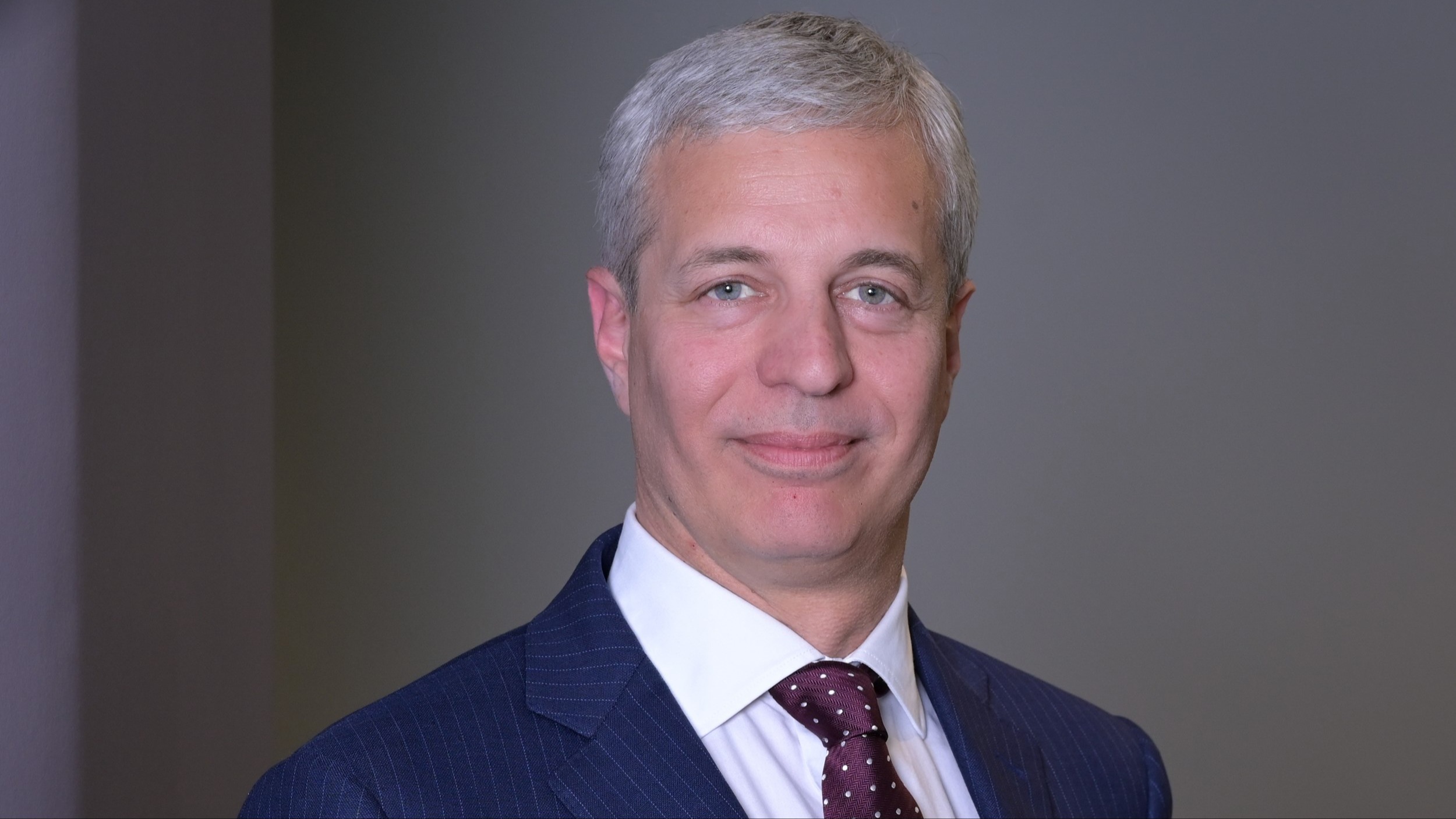
The region’s key structural tailwinds, according to Mr Antonucci, include ‘nearshoring’, green infrastructure and digital transformation, themes that have increasingly defined institutional flows.
“CEE sits at the crossroads of Europe’s supply chain rethink. Proximity and skilled labour, these days more than earlier cost advantages, make it one of the hubs for nearshoring and industrial investment,” he notes.
Scaling beyond borders
The region’s decarbonisation drive and its expanding tech ecosystem also feature prominently in investor thinking. “EU funding and policy incentives create a fertile environment for renewables, grid upgrades and energy-efficient infrastructure,” Mr Antonucci says, adding that the region’s deep pool of tech talent underpins opportunities in “software, fintech and B2B digital platforms that can scale beyond local borders”.
However, he cautions that “political noise, currency volatility and relatively shallow capital markets mean investors must combine local insight with strong governance”. For disciplined investors, he says, “the value is in focus, not breadth”.
Central Europe Stirring Special Report
Many geopolitical commentators expect a peace deal to be signed to end the Ukraine war in 2025, leading to a $1tn infrastructure rebuilding programme and investment opportunities. There are also several countries in the region which have matured from frontier bets to core portfolio positions, including Poland and Romania. Our special report takes a look
The macro data suggest a more uneven picture. Charles-Henry Monchau, chief investment officer at Syz Group, notes that foreign direct investment (FDI) into central, eastern and south-eastern Europe fell by around 25 per cent in 2024, from €100bn ($144bn) to €75bn, according to the Vienna Institute for International Economic Studies. EU member states recorded a similar 24 per cent decline, with Poland particularly weak (-48 per cent) and Romania down 15 per cent.
Two major headwinds, Mr Monchau says, have weighed on sentiment: “The crisis in German industry and uncertainty regarding Trump’s second term.” Yet several economies bucked the trend; the Czech Republic (+7.9 per cent), Croatia (+38.7 per cent), Hungary (+5.1 per cent), Lithuania (+28.8 per cent) and Slovakia, which saw inflows roughly 10 times higher than the previous year.
Momentum remained subdued into 2025. Numbers of new projects announced declined by 26 per cent in Q1 2025 compared to Q1 2024, and amount of capital committed by 55 per cent, with both reaching new five-year lows.
“Foreign investors are less confident than at the beginning of the Covid crisis or Russian invasion of Ukraine,” says Mr Monchau.
Clear tech winners
Still, FDI’s relative importance to regional growth is diminishing. “Since 2019, direct investment as a share of GDP declined in many countries,” he notes. Growth increasingly comes from domestic investment and EU funding, while targeted projects in energy transition, defence and digital infrastructure are attracting strategic attention.
Among those targeted flows, technology and infrastructure are emerging as clear winners. Microsoft, Google and Amazon Web Services are expanding data centres and cloud capacity across Poland, the Czech Republic and Romania, while Chinese companies are investing heavily in electric vehicles and batteries, notably BYD’s €501m industrial park and CATL’s €7.3bn battery gigafactory in Hungary.
Poland is also pushing forward with nuclear energy projects, including small modular reactors, to strengthen energy security. Defence and security industries are likewise benefiting from the geopolitical climate. Poland has prioritised defence as a key sector for development, creating sustained demand for manufacturing and logistics capacity.
The region has also produced notable success stories, says Mr Monchau. Estonia’s ride-hailing firm Bolt, valued at $8bn, has become a symbol of the region’s innovation potential. Poland’s Shoper S.A., a software-as-a-service ecommerce platform, grew its revenues at a compound annual rate of 45 per cent between 2018 and 2024, while Romania and Ukraine continue to foster technology and telecom champions, such as Datagroup, Volia and Lifecell.
Stockmarkets across eastern Europe have outperformed their western counterparts over the long term, though with higher volatility, says Mr Monchau. The Czech PX Index is up 175 per cent over five years, Hungary’s BUX Index 195 per cent, and Romania’s BET Index 141 per cent, reflecting rapid economic convergence and EU integration gains.
Wealthier clientele
Private banks are also adapting their models to serve a wealthier, more international client base. Zdenek Nemec, head of private bank eastern Europe at Deutsche Bank, says diversification is now a “natural step” for CEE clients expanding internationally.
“Their banking and investment needs are broad: lending for business and personal use, tactical investments, capital markets access, and co-investments with peers,” he explains. “They’re looking for support across geographies, not just in their home markets.”
Deutsche Bank’s ‘Global Hausbank’ model, Mr Nemec adds, allows clients to access its corporate and investment banking capabilities across borders. The bank has also strengthened regional coverage, having established a wealth hub in Vienna and recently strengthened it by adding relationship managers for Polish and Romanian clients.
“Our relationship and investment managers know the region, the language and the people and this is well appreciated by our clients,” says Mr Nemec.
Security is also a key consideration for CEE clients, says Gerold Reiser, head of private banking for central and eastern Europe at Rothschild & Co Wealth Management in Switzerland.
“Because clients are primarily looking for security, they usually invest their money very conservatively and cautiously,” he explains. “Many entrepreneurial families founded their companies in the 1990s and are now faced with succession issues.”
This requires structuring family assets for the long term. Clients from some CEE countries are also increasingly interested in investing in private markets, reflected by their own experience as entrepreneurs, believes Mr Reiser.
While capital flows remain fragile and fiscal strains persistent, the CEE region’s long-term fundamentals, EU integration, human capital and strategic positioning in energy and technology, continue to underpin its appeal. A sentiment Mr Antonucci of Quintet echoes. “For those willing to do the homework, the region can offer attractive risk-adjusted returns.”