
Friedrich Merz’s election victory signals a shift in Germany’s political landscape, but there is much work to be done in reshaping the economy and improving trade relations with the US.
Wealth and asset managers are warning of uncertainty in Germany, following the election victory of Friedrich Merz and his establishment of a centre-right coalition.
With latest developments sparking much soul-searching about Germany’s economic and political direction and its implications for investors, the financial community is stressing the importance of focusing on trade relations between the EU and the US.
Fiscal policy, transatlantic trade relations and potential regulatory changes will shape both short and long-term investment strategies, says Christian Nolting, global chief investment officer at Deutsche Bank Private Bank.
“What markets don’t like is uncertainty, so the primary goal for now should be to form a stable government, which seems possible given the election result,” says Mr Nolting. “A quick formation of a coalition government should allow for investor confidence and market stability.”
Over the mid-term, investors would like to see ”some kind of fiscal spending programme” to “improve” economic growth in Germany and the eurozone.
Chancellor Merz has made US-Europe relations a key concern for his mandate, a direct signal to investors worried about Germany’s political future. “His concerns are justified from our point of view. With the US applying divergent tariffs on different goods and countries, European countries may be affected in different ways,” says Mr Nolting.
The changes in US tariffs must be “considered” in investment decisions. “This isn’t just because of their potential impact on individual firms and investments. Overall, tariffs are likely to increase inflationary pressures and — everything else being equal — dampen global growth,” he explains.
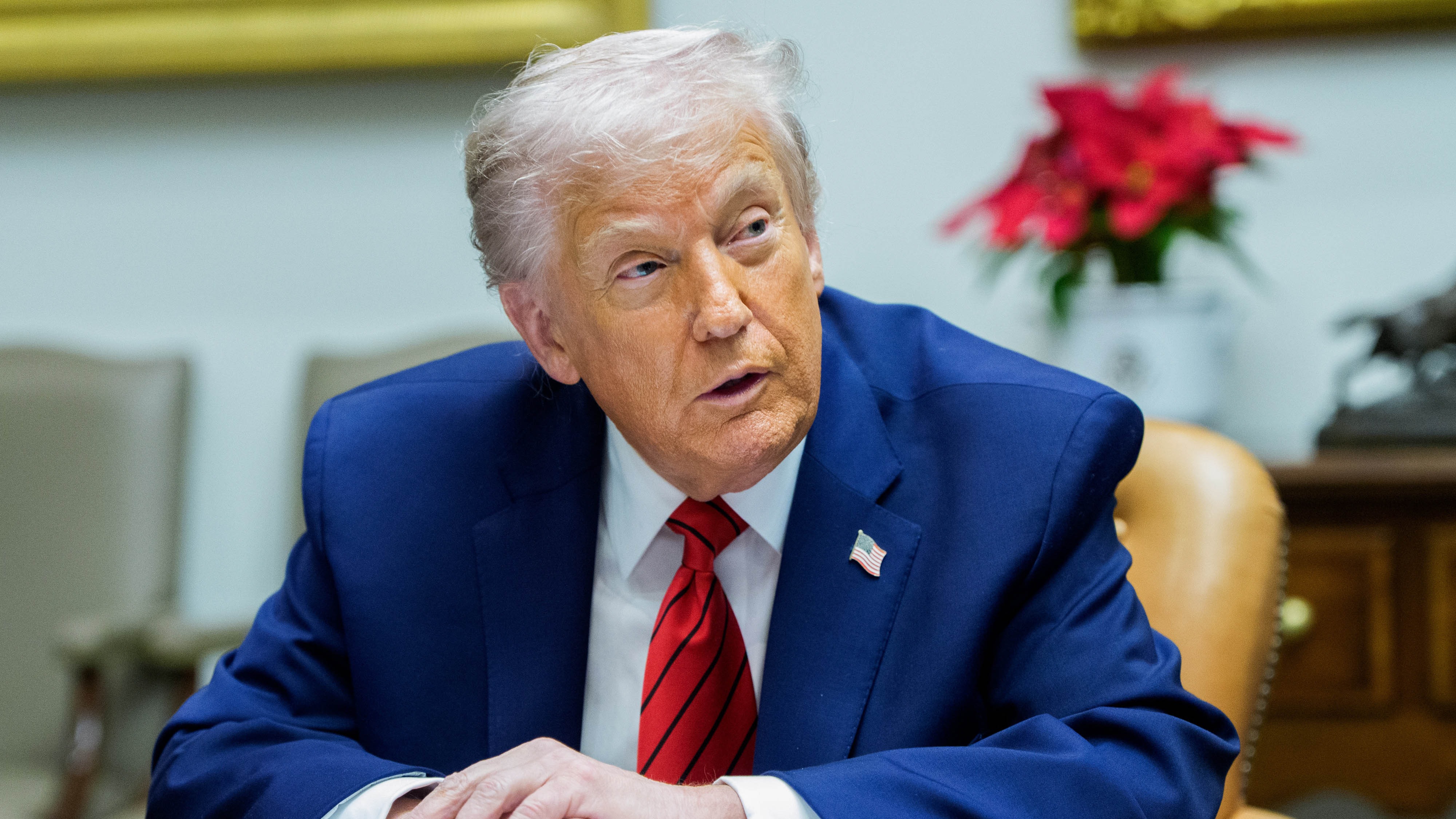
US president Donald Trump plans to impose 25 per cent tariffs on EU goods, arguing that the bloc was designed to “screw the United States”.
It is always essential for wealth managers to analyse the US-EU economic trend, believes Mr Nolting. “The economic ties between the two are close, meaning that changes of policy stances and their effects on imports and exports of goods and services can have a big impact: the euro/dollar exchange rate is immediately sensitive with longer-term impact on trade flow volumes,” he says.
“Maintaining good transatlantic relations may help keep the negative effects of tariff policies low.”
Global wealth management strategies always face a degree of uncertainty, but good transatlantic relations can help reduce this.
Investors will closely monitor shifts in tax policy and economic regulation. The Christian Democratic Union of Germany and the Christian Social Union in Bavaria, a centre-right Christian democratic and conservative political alliance, aim to implement pro-growth measures, including corporate tax cuts, a higher threshold for the top tax rate, the abolition of the solidarity surcharge, and tax-free overtime surcharges.
“As a coalition government has to be formed, some fine-tuning of these plans will probably be necessary, and wealth managers will need to address final policy agreements,” he says.
The potential changes focus "a lot" on growth, which will be crucial for investment performance. However, potential “non-implementation” offers room for market disappointment.
Defence sector renaissance
But others believe Germany faces a more fundamental challenge of redefining its economic model. As Europe’s largest economy, Germany must “completely reorientate its economy”, weighed down by high energy costs and rising global competition afflicting heavy industry, notes Alberto Matellán, Paris-based general manager at boutique French firm La Financière Responsable.
The political landscape further complicates the situation, making long-term economic planning increasingly difficult.
One sector benefiting from shifting dynamics is defence. “There are reasons to assume [defence stocks] will experience a renaissance,” Mr Matellán suggests, as European governments ramp up military spending, providing a structural tailwind for companies in the sector.
European equities appear poised for further gains, he believes, having underperformed the US in 2024. Stronger-than-expected macroeconomic data, combined with hopes of geopolitical de-escalation in Ukraine, could bolster investor confidence.
“There is still a long way to go,” says Mr Matellán, highlighting Europe’s potential upside. However, inflation remains a key risk that could weigh on sentiment.
Wealth managers should advise clients with significant exposure to European markets to maintain a globally diversified portfolio, particularly amid political uncertainty surrounding Germany’s future and its broader implications for the EU.
“Investors always should aim to have proper risk management in order to achieve a robust portfolio structure,” says Deutsche Bank’s Mr Nolting. Despite current risks, Europe has outperformed the US year-to-date, he says. With forthcoming changes and reforms, he believes there could be new opportunities ahead. However, he stresses that any positive outlook hinges on successful political and economic adjustments.