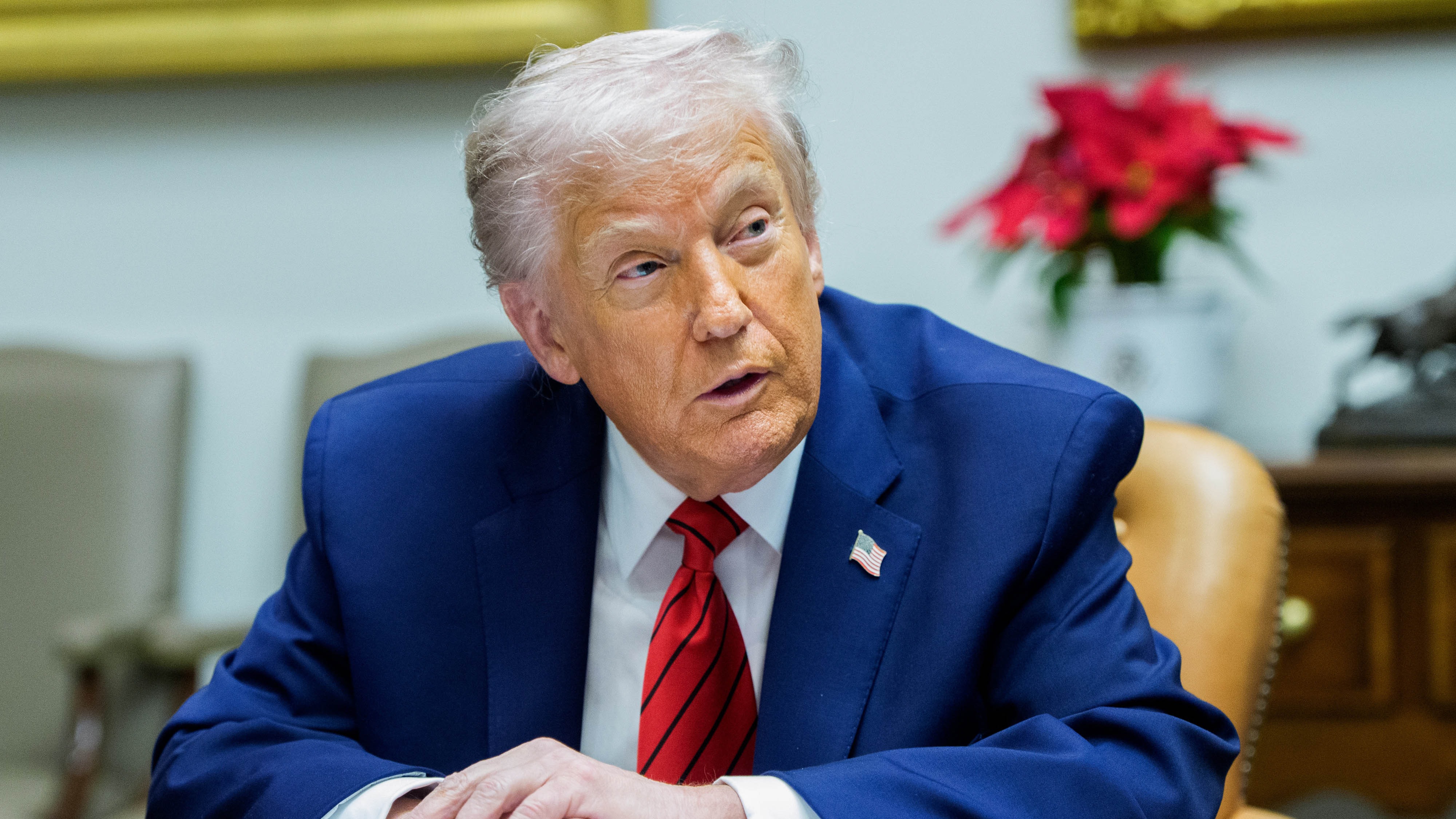

Tariffs are a weapon promoted by Donald Trump, able to cause chaos in both markets and trade relationships, but are they really a sign of American weakness rather than strength?
Every few years, the claim resurfaces that America is being “ripped off” by its partners, that trade deficits are signs of national failure and tariffs are the only appropriate response.
It’s a politically powerful story, directing anger outward rather than inward. But the real explanation for America’s persistent trade deficits lies not abroad. It lies in domestic choices — overconsumption, underinvestment in productivity and fiscal policies that favour spending over saving.
The history of America’s position in the global economy makes this clear. In the immediate aftermath of the second world war, the US stood economically unchallenged.
At the 1944 Bretton Woods Conference, the US helped design a global financial order based around the dollar, fixed exchange rates and relatively limited trade imbalances. In this system, the US often ran surpluses because much of the industrialised world was rebuilding, and American manufacturing dominated global markets.
That equilibrium began to erode by the late 1960s. The growing affluence of Europe and Japan created new competition. Meanwhile, the US began running fiscal deficits, particularly to finance the Vietnam war and Great Society programmes. Pressure on the dollar mounted.
In 1971, president Richard Nixon formally ended convertibility of the dollar into gold, breaking the Bretton Woods system and ushering in floating exchange rates. This pivotal moment marked the beginning of persistent trade deficits.
Twin peaks
In the 1980s, under president Ronald Reagan, trade deficits expanded sharply. Massive tax cuts and increased military spending drove up fiscal deficits and the strong dollar — fuelled by high interest rates — made US exports less competitive.
The deficit peaked at around 3.5 per cent of GDP in the mid-1980s. Far from being the result of unfair foreign practices, this reflected internal macroeconomic policy: a combination of tight monetary policy and loose fiscal policy, known as the “twin deficits”.
The 1990s brought the North American Free Trade Agreement (NAFTA) and China’s gradual integration into the global economy. These moves were designed to lock in a liberal trading system, benefiting US consumers with lower prices and expanding markets for American companies. But they also intensified competition.
When China joined the World Trade Organization in 2001, it became a major exporter of manufactured goods, further widening the US trade deficit. Again, this was not because China forced America into unbalanced trade, but because American consumers eagerly embraced cheaper imports, while US companies offshored production to maximise efficiency.
Today, the US trade deficit stands at roughly $1tn annually, according to the Commerce Department. This reflects structural features of the US economy, not external manipulation.
Americans save less, consume more and attract vast foreign capital inflows, which, by definition, require a corresponding trade deficit. Attempts to reduce the deficit through tariffs, as tried during the 2018–2020 trade wars, failed. Imports from China fell, but the gap was filled by imports from Vietnam, Mexico and others.
Broken chains
The overall deficit barely budged, and American consumers bore the cost. Studies show the tariffs effectively raised prices for households and disrupted supply chains, without achieving the intended revival of domestic manufacturing.
The deeper drivers are straightforward but politically inconvenient. Productivity growth —the ultimate measure of economic strength — has been disappointing for more than a decade. Between 2010 and 2023, productivity gains averaged just 1.3 per cent annually, far below the 2.2 per cent post-war norm.
Meanwhile, the US household saving rate, briefly lifted during the Covid-19 pandemic, has now fallen back to just 3.6 per cent, compared to historical averages closer to 8 per cent in the 1960s and 1970s.
America’s unique role as issuer of the world’s reserve currency further reinforces this pattern. Global demand for dollar-denominated assets — Treasuries, corporate bonds, equities — keeps the dollar strong, making US goods more expensive overseas and imports cheaper at home.
While this supports the dominance of Wall Street and the federal government’s borrowing capacity, it structurally deepens the trade deficit.
Protectionism offers no real answer. History shows raising tariffs may provide temporary relief for some industries, but it rarely, if ever, leads to a sustainable rebalancing. The Smoot-Hawley Tariff Act of 1930, designed to protect American jobs during the Great Depression, instead deepened the global economic collapse as retaliation spiralled.
Beans and bikes
More recently, the 2018 tariffs sparked countermeasures from China and Europe, harming American exporters from soybeans to motorcycles.
The true path to strengthening America’s economic position lies elsewhere. It demands large-scale investments in infrastructure, education, research and technologies that will define the future — artificial intelligence, clean energy, advanced manufacturing. It requires a tax and fiscal structure that encourages saving and productive investment, not merely consumption fuelled by cheap credit.
It requires policymakers to recognise that sustainable competitiveness comes from leading industries of the future, not protecting industries of the past.
Trade deficits are a symptom, not a cause. They reflect deep preferences: for spending over saving, for consuming today over investing tomorrow. They reflect America’s macroeconomic priorities, its fiscal choices and its societal values.
Blaming other countries for resulting imbalances is convenient but corrosive. It encourages policies that raise costs for American families, damage alliances, and ultimately weaken America's position in the global economy.
There is no shortcut back to industrial primacy. No tariff wall will insulate the US from competition. No rhetorical flourish will disguise the need for serious, long-term reforms.
If America wants to close its trade gap in a meaningful way, it must focus not on punishing others, but on rebuilding its own economic foundations.
That’s the only path to genuine competitiveness and the only way to ensure lasting prosperity.

Nigel Green, deVere Group CEO and founder