Kyiv diary: autocratic and democratic markets in battle for investment
By Yuri Bender

As a war between authoritarianism and democracy continues in Ukraine, investors are beginning to redefine their attitudes to political systems following the US election.
A late night, autumnal panel discussion on competition between autocracy and liberal democracy — held in the reinforced basement of a Kyiv hotel — was briefly interrupted by the distinctive wailing of air-raid sirens.
Most locals carried on their business regardless. Their smartphone apps showed them that the Iranian-made Shahed drones fired by Russia would land several miles away from the golden-domed cathedrals of the city’s historic centre.
But this was no ordinary gathering. Panellists holed up in the upmarket subterranean shelter included political scientist Francis Fukuyama, historians Anne Applebaum and Timothy Snyder, and CNN host Fareed Zakaria. These commentators were all in Ukraine to address the annual Yalta European Strategy summit, hosted by oligarch-turned philanthropist Victor Pinchuk. Originally held in Crimea, until the southern peninsular was seized by Moscow in 2014, the summit migrated to Ukraine’s capital city, and continues to be staged each year, even during war time. I had the privilege to take part in these discussions, interviewing investment managers and politicians, taking the temperature of the economic and geopolitical landscape.
The panel moderator, war-weary journalist Nataliya Gumenyuk, laughed as she reassured alarmed foreign visitors that our underground haven was “probably the safest place in Kyiv”.
Those in the room were in for a treat, as the session was extended to outlast the aerial incursion.
The symbolism of the situation — a discussion about competing political systems held in Ukraine, during a Russian air raid, with ‘The end of history’ author Mr Fukuyama taking part — was not wasted on the audience. As the Cold War was drawing to a close in 1989, Mr Fukuyama predicted the ultimate victory of liberal democracy over authoritarianism.
He now admits liberalism is on the back foot, captured by “neoliberals”, undermining the state’s ability to regulate markets and provide services. A backlash from right wing forces around the world has materialised as inequality increased.
But this is not a minor structural problem. It is much more serious than that, according to Mr Snyder, who describes the world’s first defining, “kinetic” battles over ideology being waged in Syria and Ukraine: roughly speaking, a clash between autocratic and democratic worlds.
New world order
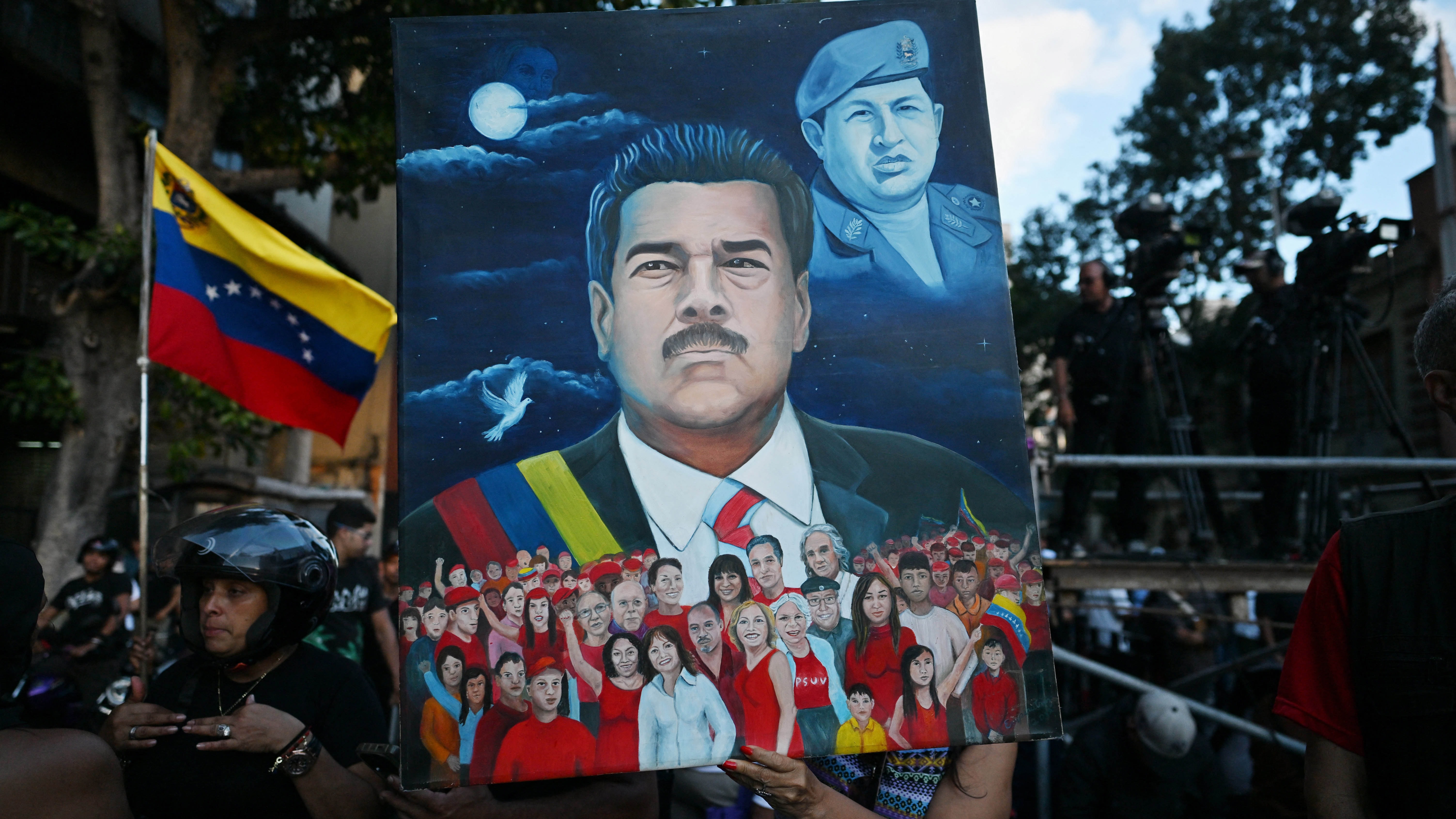
Invading Ukraine in 2022, Vladimir Putin wanted “to show the rest of the world that the democratic world, that our rule of law doesn't matter”, that international conventions do not apply to him and the result of the war will define a new world order. China, Iran and Venezuela are all waiting to see if his autocratic attempt to rewrite the rules of international politics is successful.
But the battle is not ideological, it also concerns truth and fiction. “You can't have large-scale national discussions without media that generate facts,” believes Mr Snyder. For many of today’s opportunistic political entrepreneurs, it is often easier to defend autocracy, with fiction, than democracy, with facts.
Liberal democracy actually avoids defining truth, according to CNN’s Mr Zakaria, whereas autocratic “clerics, kings and commissars” claim to be bearers of truth. Unlike “fear and devotion to an emperor” or despot, today’s liberalism fails to “stir the souls of human beings”.
This split between two definitive systems has been prominent among investment practitioners. Our interviews during the summer showed institutions and family offices viewed their investment universe as being split between two blocs. This pitched an authoritarian nexus of Russia, China and Iran plus some of the latter’s middle eastern allies, against a US-led cohort of more liberal countries, including much of Europe and south-east Asia plus Japan.
The first bloc — described as an “adversarial” camp by French fund house Carmignac — is deemed no-go by most institutions. However, they see the second “Nato+” grouping as imminently more investible. Nations of the ‘global south’, including India, Turkey and much of Africa, are able to trade and invest with both blocs for the time being.
“Sentiment has shifted significantly since the US election of November 5, with investors around the globe positioning themselves for an unpredictable US economy under ultimate stewardship of Donald Trump”
Shifting sentiment
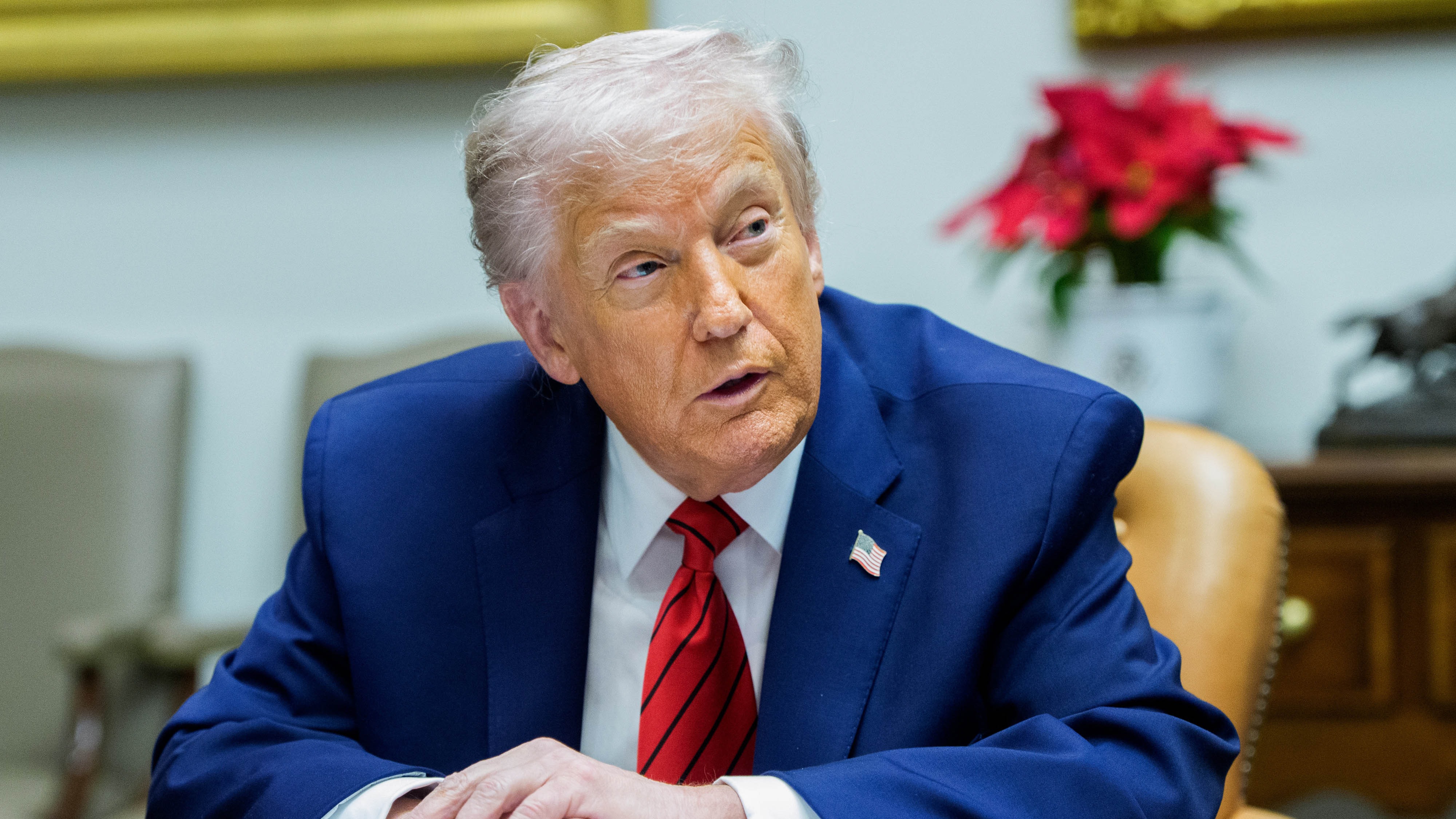
Sentiment has, however, shifted significantly since the US election of November 5, with investors around the globe positioning themselves for an unpredictable US economy under ultimate stewardship of Donald Trump. Some even see the US entering the non-investible bucket, with a corrupt “Trump first” personal enrichment plan replacing the Republicans’ previous “America first” philosophy, in a system prioritising loyalty over ability or knowledge.
One well-placed US political adviser predicts “a hollowing out of support for Ukraine, a blank cheque for Netanyahu in Israel and Nato potentially on the chopping block”. This is in addition to highly protectionist trade tariffs, mass deportations requiring police acquiescence, and the “gutting of civil society”.
“The goal is creating chaos, so the state cannot function,” he says. “Everything is about power and personal enrichment.”
Yet this is not the majority view among investors, who see previous binary certainties entering a state of flux. “The mix of reflationary policies and brisk foreign policy of the new US administration will entail risks of asset class booms and busts,” believes Didier Duret, chairman of Omega Wealth Management, overseeing assets for several wealthy European families.
What he calls “animal spirits” can push equity markets to “extreme valuations followed by severe corrections”. He also expects this new investment regime to create increasing cross-asset volatility.
Risks associated with a new geopolitical investment order, including assertive supply-side economics combined with nationalistic economic and foreign policies, can create “momentous” reactions within the international community.
“It can be an accelerator of unexpected changes in EU nations and China towards regional self-interest,” says Mr Duret. This includes a cocktail of restrictive domestic deregulation, and isolationist energy, technology and trade policies.
Diversifying political risk
Financial experts now concur that narrowing the investment and trade universe between authoritarian and trade blocs may be unhelpful, alienating progressive players and denying possibility of political change in a volatile international environment.
The sudden acceleration of history has taken most wealth managers and fund houses off guard, particularly when looking at the Covid-19 pandemic and Russia’s latest invasion of Ukraine. Rather than allocating in a polarised fashion, the philosophy of investing in the MSCI World index as a strong political risk diversifier is gaining popularity, embracing newer ‘non-aligned’ markets including India, plus countries in the Middle East, Africa and Latin America.
Assuming that Russia, China and Iran will remain aligned in an immovable bloc, determining a new Cold War, may be counterproductive. Beijing, believes Mr Duret, will make practical diplomatic efforts to reduce cross-border conflicts and promote its international influence. It will highlight its strategic advantages in AI and nuclear strategies, as part of longer-term adjustments to Chinese capitalism.
This mirrors the attitude of family offices to geopolitics. Whereas the older generation of investors came to the conclusion they should no longer invest in China, due to moral and governance considerations, their successors are likely to be more flexible.
“They see opportunity in China, but from a long-term view,” says Belinda Aspinall, head of global family office business for the Emea and Asia-Pacific regions at US wealth manager Northern Trust. She especially recognises the needs of major European families involved in sectors such as auto manufacturing, where the China-Taiwan relationship is crucial to their supply of semiconductors.
“They feel changes need to be made, that we need to be friends with China. But they are no longer expecting stellar returns over the next three years.”
Rouble rout
As they wait for peace talks to commence, the best financial news for those sheltering in Ukrainian basements from waves of relentless Russian bombs, comes from Moscow. The rouble appears to be in free fall, already down 15 per cent during November, now at its weakest since Mr Putin’s invasion of February 2022.
One of the causes of this major shift is President Joe Biden’s tightening of sanctions against Moscow before his handover to the Republican Administration next January, making it trickier for Russia to transact trade and weakening Mr Putin’s bargaining position in potential peace talks. This will likely significantly lower the standard of living of Russians, many of whom have so far been immune from the conflict’s economic damage.
This move also shows the unity of any Brics investment bloc, uniting Russia and China, is not as strong as many make out.
“It feels as though China is working to assist the G7…not going out of its way to help Russia to alleviate pressure on the rouble,” says Timothy Ash, senior sovereign strategist at RBC BlueBay Asset Management, and one of the few economists to predict the war.
“China likely has been annoyed by Russian actions to bring North Korea into the conflict, pulling North Korea further out of Beijing’s strategic orbit. China also probably wants to be seen as being helpful to the Trump administration…to help secure tariff moderation on its own behalf.”
Rather than the nuclear-propelled “end of history” often threatened by Mr Putin and his colleagues, the realignment appears to be the start of a new chapter.
Yuri Bender is editor-in-chief of PWM