
Private banks have been hamstrung by groupthink and lack of beneficial incentive programmes, with many players missing key geopolitical and investment trends.
Wealthy European families — served by specialist investment managers — are increasingly allocating assets according to geopolitical realities, reveals experienced private banker Beat Wittmann, during one of his regular trips from Zurich to London, visiting key clients.
Central to their decision-making, amid today’s re-configurated geopolitical reality, is the position of Germany and the new leadership in Berlin.
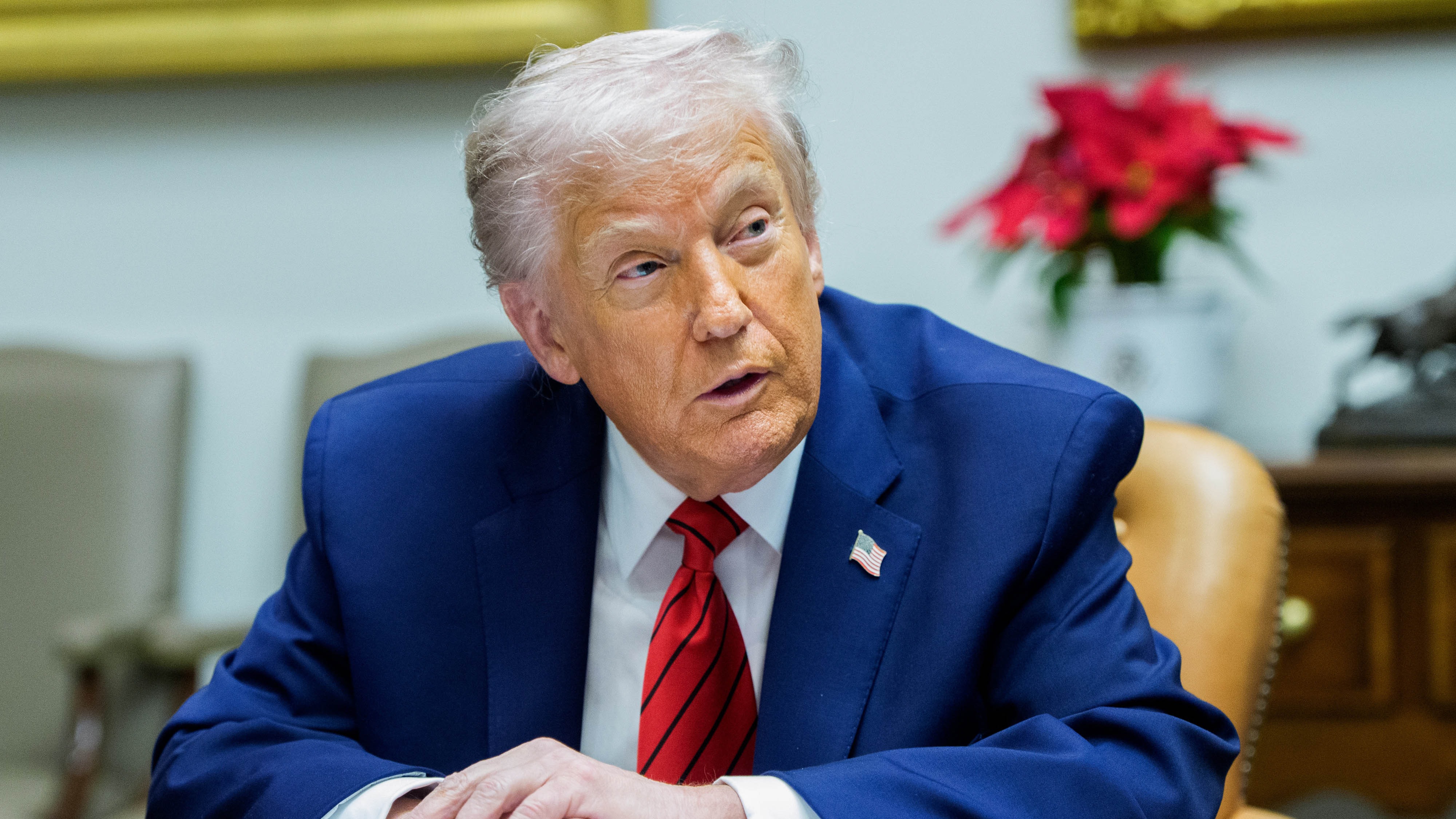
Following Russia’s invasion of Ukraine in February 2022, the election of Donald Trump as US president and the landmark speech of his vice-president JD Vance at the Munich Security Conference in February 2025, investors’ attitudes have changed significantly, he says.
“These factors were a harsh wake up call for Europe collectively, meaning dependency on Russian resources had to be reduced,” says Mr Wittmann, chairman and founder of Porta Advisors and an unusually outspoken member of the Swiss financial establishment.
“The previous German model was based on exporting goods to China, importing cheap energy from Russia and outsourcing security to the US,” he says.
The German government, led by chancellor Friedrich Merz, has been outspoken in ending this system, but “the proof will be in the pudding” when it comes to the impact of de-risking from China, raising military expenditure to 3.5 per cent of GDP and spending 1.5 per cent on “critical infrastructure” related to defence, digitalisation, cyber security, transportation, bridges and energy.
“This plays a very big role for investors,” believes Mr Wittmann. “From a currency point of view, not only have European markets outperformed this year, but the euro has clearly outperformed the dollar.”
Families are favouring European assets as they vote with their feet against Mr Trump’s tariffs. “We have seen from the US bond market, that whenever there was demand for safe haven assets, German bonds were preferred to US Treasuries, and the euro was preferred to the dollar.”
Wittmann’s top tips to Beat the market
- Examine geopolitical realignments, particularly European and German resurgence
- Listen to a broader range of opinions, outside the biggest banks
- Invest with family owned firms offering efficient incentive systems
- Focus on a regionally biased core, with global satellite plays
- The Ukrainian rebuild investment story will be too big to ignore
Forecasting failures
Private banks struggled to forecast these major geopolitical trends and their impact on family finances, with leading players failing to plan for Russia’s invasion of Ukraine and the market, geopolitical and trade turmoil which followed.
“Large banks, investors and pension funds tend to be pro-cyclical and lagging, because they are part of a groupthink,” suggests Mr Wittmann. “Clearly there are intelligent, highly qualified people in these banks, but there is a collusion of business interests, which also runs across all political parties.”
Inspired opinions come only from a handful of individuals, not usually employed by big-brand financial firms. Yet a new awareness of factors impacting volatility is fast transforming political and financial systems, he believes.
“We have entered a different era,” he says. “There is a very high level of awareness about the Chinese situation, a new realism concerning Russia, and now in economic terms, relating to the Trump administration. The Europeans have realised they have to do something and it has started, but there's a lot more to be done.”
There is also a fear that the largest financial firms are still repeating yesteryear’s errors, with widescale sale of hedge funds by private banks prior to the global financial crisis in 2008 mirrored in today's mass marketing of illiquid private assets. This leaves investors including Mr Wittmann feeling “nervous”, as delinquency and default rates edge ahead of cyclical averages.
Behemoths and challengers
“That could have contagion effects on emerging markets,” he says. “That's a kind of replay of some sort of financial crisis and the ingredients are already there.”
Despite these challenges, Mr Wittmann believes behemoths will still rule the roost, closely followed by specialist challengers rising through the private banking ranks of Zurich and Geneva.
He knows the private banking ecosystem well, having previously served as CEO of investment products at Julius Baer and heading up European equity products and strategy at UBS for much of the 1980s and 1990s.
“Technology plays a very big role in finance as a disruptor, certainly involving AI, so there is permanent restructuring,” he says, describing two key developments.
“Firstly, the big banks, if well managed, will prevail. In times of turmoil and uncertainty, clients go to big brand names.”
Successful firms, he believes, will include JP Morgan and Fidelity in the US, and the likes of UBS, HSBC and Amundi in Europe. “They will continue to capture market share, but their margins will increasingly come under pressure,” necessitating high-quality technology.
The second strand will be family-owned “specialists focused on wealth management”, including LGT, Safra Sarasin and Pictet, boasting advantageous incentive structures. Stuck in between these two poles, listed banks overseen by employees, such as Julius Baer, will struggle due to “asymmetric incentives”.
While the likes of UBS will increasingly behave as “infrastructure providers”, supplying investment plumbing for growing numbers of family offices and external managers, Mr Wittmann believes tomorrow’s most successful portfolio managers will be ‘multi-boutique’ managers, including BNY Mellon.
Guided by these players, private clients will typically invest domestically or regionally.
“For the next three to five years, we will have global fragmentation, including trade wars, protectionism and weakening of multilateral organisations,” he says.
Investment opportunities of this multipolar world will gravitate to the three “superpowers” of Europe, China and the US. “You are best served by investing in your own region, which should be the core of your investment exposure,” augmented by some selected satellite plays.
“We are seeing a big flow back into the US from US investors. The Europeans and Asians are doing the same. All of these three regions will prosper economically. There will be strong home bias, with plenty of attractive opportunities in the respective three regions.”
But it is Europe where he believes the best prospects lie for investors. In a note to clients, dated May 24 2025, Mr Wittmann writes: “Ukraine’s huge need for reconstruction presents a massive and attractive supply-side opportunity benefiting Germany and Poland in particular. Successfully reconstructed and integrated Ukraine presents Europe with the opportunity to take an enormous geopolitical step forward in regards to its much-needed strategic autonomy.”