US market turmoil opens door for European outperformance
By Beat Wittmann

The end of the post-war political, economic and security consensus has major consequences for business models and asset allocations.
Two major pronouncements were made by leaders of transnational institutions in mid-April, which set the scene for building a new world order. On April 16, the president of the European Commission wrote: “The West as we knew it is dead.” The following day, the managing director of the IMF observed that uncertainty is costly, that trade barriers hit growth and that “protectionism erodes productivity over the long run, especially in smaller economies”.
Ursula von der Leyen and Kristalina Georgieva share impressive professional backgrounds, unwavering commitments to global co-operation and vast experience in crisis management. Both have realised that the Western post-second world war political, economic and security order is now history. Instead, they believe, efforts should be focused on building a more balanced world economy. This has unprecedented consequences for both business investments and financial asset allocations.
Winners and losers
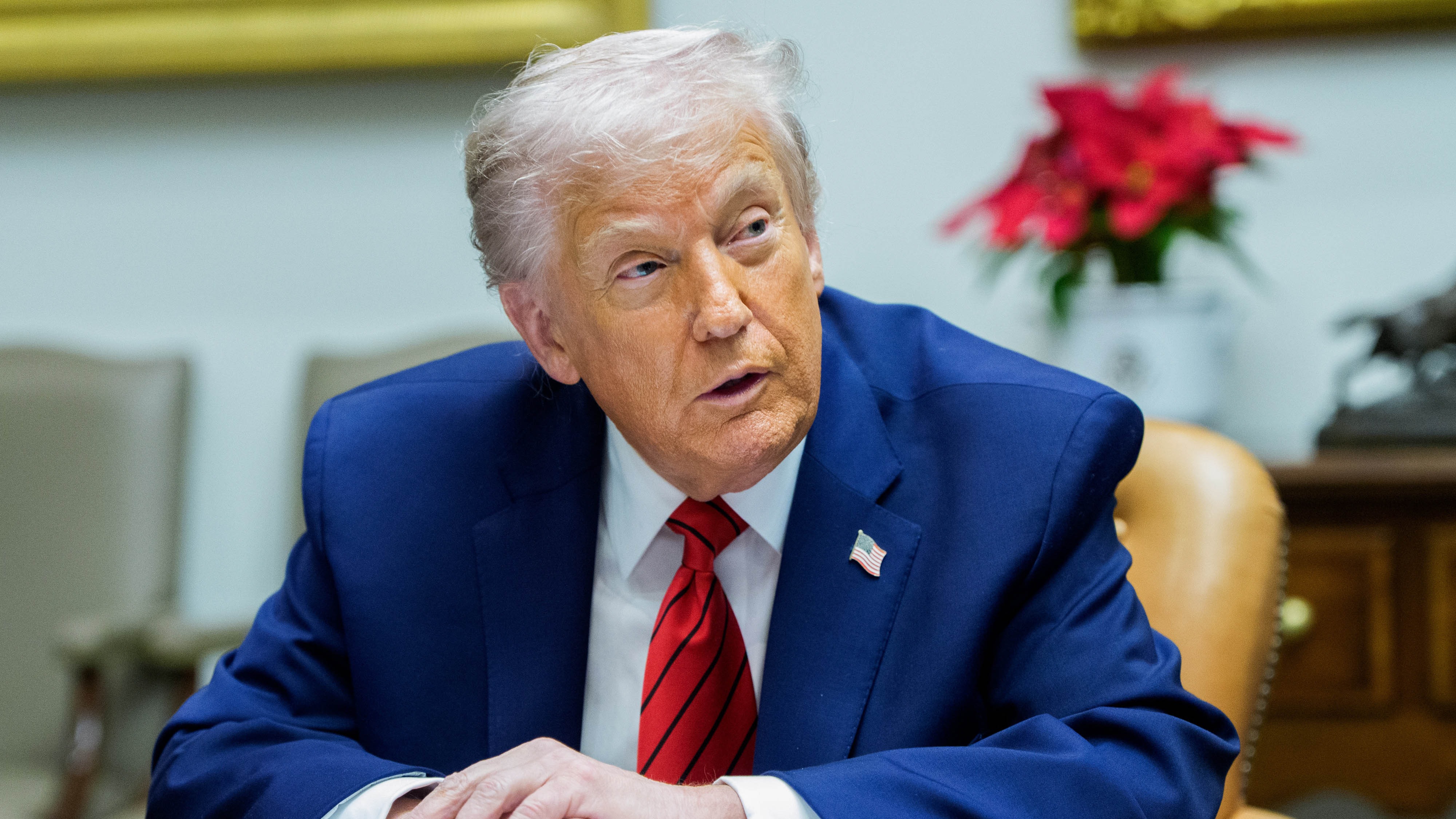
President Donald Trump has inherited a US economy in extraordinarily good shape. However, he has wasted no time to engage in multiple political and economic confrontations, domestically and internationally. It is futile to try to second-guess Mr Trump’s mind and inner workings. Instead, we recommend three points to successfully navigate his policies: pay attention to his words, analyse his actions and carefully follow economic data and capital market prices as reliable indicators.
To Mr Trump and like-minded far-right nationalists, the world is a zero-sum game producing only winners and losers. It is not about economics. It is all about loyalty, power and dominance. At Mr Trump’s court there is no rule of law, no adherence to majority decisions, no separation of powers and no respect for multilateral agreements and contractual obligations.
The most dangerous damage is caused by Mr Trump’s attack on US Federal Reserve chair Jerome Powell and the central bank’s independence. The result is potential loss of trust in the integrity of US capital markets and the role of the US dollar as leading reserve and safe haven currency.
Misreading the EU and China
There are three superpowers in the world: the US, the EU and China. Mr Trump is monumentally mistaken on two of the above and it will haunt him.
First and foremost, the highly indebted US depends on large inflows of foreign capital. This is not a problem as long as US risk assets outperformed and the rule of law was guaranteed.
Mr Trump underestimating China and the EU unveils major geopolitical miscalculations. China will continue to retaliate reciprocally and will never give in to US pressure, while the EU keeps calm knowing that Mr Trump’s tariffs will hurt the US most.
Time is on the side of the EU and China. Their respective weaknesses and shortcomings are largely self-inflicted and can be addressed internally with the EU striving for strategic autonomy in defence, energy and finance, and China moving its economy towards consumption and services.
All relevant economic and capital market data cast a brutal verdict on Mr Trump’s nearly first 100 days in office. Economic and sentiment indicators are plummeting while equities, bonds and the dollar continue to sell off. The jury is still out on whether the current turmoil will escalate into a financial crisis and market meltdown or lead to a recession and cyclical bear market.
We believe Mr Trump will only pause and bend to a decisive loss of political support within the GOP and Fed chair Mr Powell will only intervene in case of a major risk event endangering overall financial system stability. In the latter context, key economic and market indicators to watch are the weak links in the system, namely illiquid, opaque and leveraged niche assets including high yield debt, hedge funds and crypto-assets.
Disinvestment from the US
The president has catapulted the US from rules-based international order into strategic isolation. Such hostile economic actions lead to disinvestment and potentially, capital flight by foreign investors away from the US. Treating European alliance partners worse than their enemies, namely Russia, has accelerated the trend towards regional fragmentation. Investors are well advised to follow suit by reassessing asset and geographic allocations and making their respective home regions, countries and reference currencies their core investment exposure.
US financial assets are set to structurally underperform throughout the Trump presidency as capital flows reverse while economic growth, corporate earnings and valuations suffer. A growing risk premium will be required to compensate for heightened levels of uncertainty, the weakening of the institutional framework and rule of law.
Investment favourites
In 2025 and beyond, we expect Europe to outperform by a wide margin. Leading safe haven assets are German Bunds and the Swiss franc. Superior capital gains within European equity markets are led by the energy and infrastructure sectors and, above all, the defence-industrial complex.
There are two key drivers for superior returns in European financial assets. First of all, Europe is firmly committed to global co-operation, a strong institutional framework, uncompromising separation of powers and the rule of law. In addition, Europe, led by Germany and its designated chancellor Friedrich Merz, has started to engage in structural reforms and fiscal expansion to make its economy more productive, competitive and resilient.

Beat Wittmann is chairman and partner of Porta Advisors in Zurich, and a former senior manager at Julius Baer and UBS