As the US and China collide, no investor will be spared
By Philippe Bolopion

With 2025 approaching, the investment world is polarising into two rival blocs, highlighting the skills of political scientists and quantitative specialists.
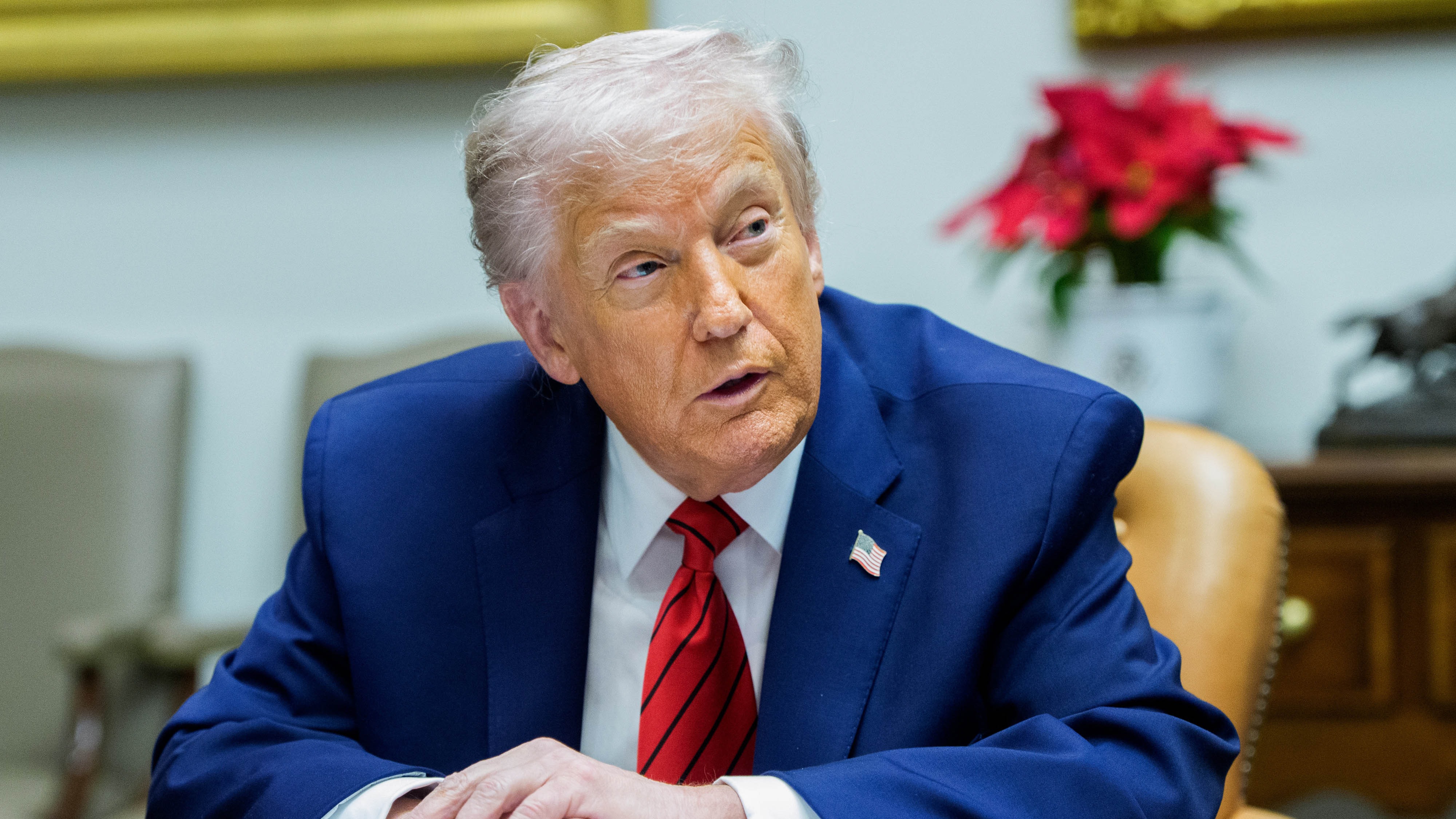
Whatever one thinks of the election of Donald Trump, one thing is clear: the world order is destined to be rearranged in the next decade around the strategic competition between the US and China.
The president-elect has made crystal clear that he intends to impose stringent tariffs on Chinese goods, up to 60 per cent. Trade sanctions, export controls and scrutiny of foreign investments linked to China are almost certain. Mr Trump has already stacked his team of nominees in key posts with officials who hold uncompromising views on China, starting with Marco Rubio, to lead the State department.
The hardened stance on China is well-established in the Republican party, which now controls the US Congress. Governor Greg Abbott of Texas, the eighth largest economy in the world, directed all state agencies to divest their portfolios from Chinese investments on November 21, a day after he issued an executive order to protect critical Texan infrastructure from attacks by the Chinese Communist party.
China has already started retaliating by banning shipments to the US of key metals needed for the manufacture of semiconductors. For years, China has worked tirelessly, openly and covertly, to undermine US interests in the world. With the election of Donald Trump, history is accelerating and the direction of travel seems obvious.
As competition between the US and China heats up and takes multiple forms — including tariffs, sanctions, influence campaigns and military posturing — financial markets are likely to be roiled in ways that few investors fully grasp. Investors who are unprepared are likely to pay the price.
Many large institutional investors have taken steps to protect their portfolios, in some cases dumping Chinese equities from their portfolios or opting for EM-ex China strategies, while managing Chinese equities separately, to be more nimble and reactive. They have woken up to the fact that even though Chinese GDP has doubled in the last 15 years to reach 18 per cent of global economic output, Chinese equities have returned very meagre risk-adjusted returns compared to other emerging economies.
Investors who have taken these valuable steps may be under the illusion they will be protected, should the Chinese economy take a turn for the worse, or should China and the US enter into a more direct confrontation.
In fact, they are likely to take more of a loss than they realise. Research shows that a typical global equity portfolio is mostly exposed to China indirectly, not through Chinese equities but instead through investments in companies that are listed in the US or Europe and heavily reliant on China for consumers, capital or supply chains — think VW, for example. Any serious effort to derisk a portfolio from China has to take this dimension into consideration.
Democratic dividends
But the problem runs deeper. Behind the US and China, two worlds are colliding. Led by China is a loose coalition of entrenched autocracies, who share nothing in terms of ideology but form a determined and coordinated coalition in their intense desire to challenge the US-led world order and undermine Western sanctions.
This coalition, comprised of countries such as Russia, China, Iran, North Korea, Venezuela and Cuba, has been dubbed “Autocracy Inc.” by historian Anne Applebaum. It seeks to undermine democracy globally, the latest example being the presidential election in Romania where the first round had to be scrapped after evidence emerged of Russian meddling.
While one might argue there are fair reasons to worry about strength of democracy in the democratic camp led by the US, these countries still display vigorous democratic cultures with built-in checks and balances that have held firm in the face of challenges, as illustrated by the recent failed attempt to impose martial law in South Korea.
For investors, there is a world of difference between these two blocs. As evidenced by the research of MIT’s Daron Acemoglu, who received the Nobel Prize in economy in November, democracy is good for business while autocracy is risky, economically irrational, and destroys value in the long term.
It's notoriously difficult, even for the best of political risk analysts, to predict where the next crisis will erupt — the geopolitical equivalent of predicting the market. But it is safe to assume the coming years will bring increased geopolitical instability and unpredictability.
With these democratic and autocratic blocs likely to collide more directly, no one will be spared. But investors would be well inspired to place their long-term bets on democracy, for it has proven to be resilient and able to adapt. To do so, they will need to creatively devise new strategies and leverage the best of available political science and quantitative finance.

Philippe Bolopion, managing director and LBRTY strategy lead, TOBAM