
Fund Selection — August 2025
Panel

Benjamin Hamidi
Senior portfolio manager, ABN AMRO Investment Solutions.
Based in: Paris, France

“US economic data remain solid overall, with household consumption holding up well and growth remaining dynamic. The effects of US tariffs and immigration restrictions, particularly on inflation, have not yet been fully integrated, and uncertainties remain. Therefore, for the time being, the Fed is not cutting rates any further, but the recent deal between the US and its major trading partners should provide more visibility going forward. Against this backdrop, we are maintaining a moderately diversified asset allocation. We remain attentive to the impact of tariffs and political risk, and maintain a cash cushion that can be deployed opportunistically.”
Luca Dal Mas
Senior fund analyst, Aviva Investors.
Based in: London, UK

“Investors welcomed a reduction in trade uncertainty as the US reached tariff agreements with both the EU and Japan, pushing the local equity indices higher. Both deals impose a flat 15 per cent tariff on imports, while both the EU and Japan will reduce tariffs on US goods and commit to significant investments in the US. The effective US tariff rate is now estimated at 20 per cent — up from 2.5 per cent pre-Trump, potentially adding 1.8 per cent to inflation and reducing GDP by 1.3 per cent in the US. On the economic side, US manufacturing data weakened while services improved. The period ahead will see multiple central bank meetings and key US data releases, which will shape expectations for potential rate cuts.”
Jorge Velasco
Director of Investment Strategy, CaixaBank Private Banking.
Based in: Madrid, Spain

“Government bonds lost ground, with fiscal easing and hawkish-leaning signals from the Fed and ECB pushing yields higher. Exposure to dollar-denominated debt has been avoided, as has debt within the Eurozone. Although markets anticipate fewer rate cuts from the European Central Bank than we do, there are no active bets on duration or curve positioning. We maintain our constructive view on sovereign debt from Italy and Spain, as well as corporate bonds and subordinated financials. On the equity side, geographic diversification remains in place — albeit uncomfortably — while the growing importance of company-specific factors over broader market trends is opening up opportunities for alpha through stock selection. In currencies and commodities, oil prices have not returned to the lows seen before the bombing in Iran, but we still believe the most likely scenario is a new range closer to $50 per barrel. The dollar is expected to continue weakening over the long term, though a sideways trend may dominate in the near term. The most critical factor in asset allocation is the recalibration of US financial asset weightings. Economic and corporate data support maintaining an underweight in both US equities and bonds, with a strong preference to minimise dollar exposure. Overall, a cautious and highly tactical approach to risk remains the favoured strategy.”
Adam Norris
Portfolio Manager, Columbia Threadneedle Investments.
Based in: London, UK

“Equity markets’ V-shaped recovery from April’s lows continued through July, once again led by US tech behemoths. The so-called Magnificent 7’s earnings were spectacular, beating analysts’ expectations. As a result, the chasm between these seven stocks and the remaining 493 S&P stocks continues to grow. In the portfolio, Alger Focus Equity led with its significant exposure to mega cap technology names, up 9 per cent through July. Iguana Long/Short Equity was the weakest performer, but remains strong through the year despite its market-neutral equity exposure. Our asset allocation remains unchanged, with an overall pro-risk position and bias towards US and Emerging Market equities.”
Silvia Tenconi
Multimanager Investments & Unit Linked, Eurizon Capital SGR.
Based in: Milan, Italy
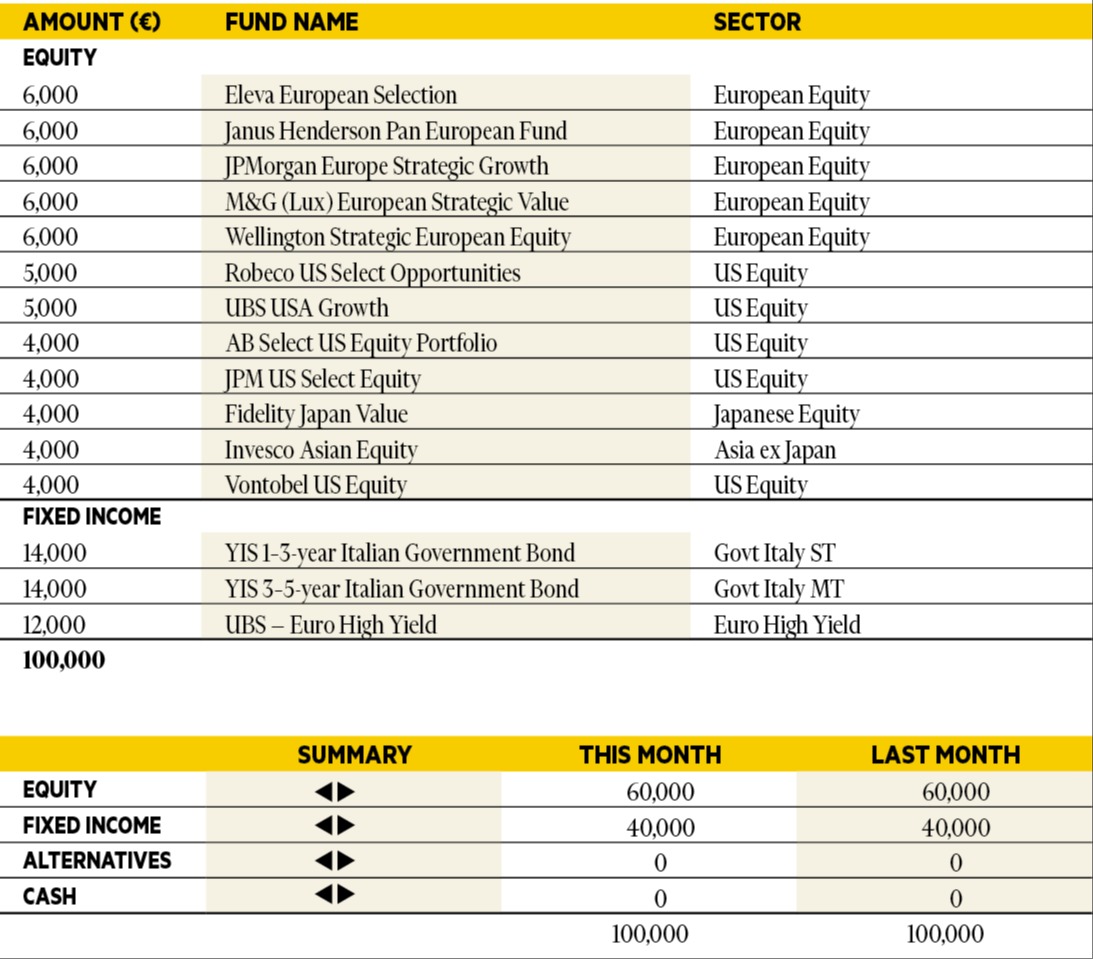
“The portfolio’s performance was positive in July, with JPM US Select Equity contributing the most. Equity markets resumed their climb, credit had a positive month and government bonds were flattish in both the US and in the Eurozone. The US dollar strengthened while the Japanese yen weakened against the euro. US tariffs were again in the spotlight, with Japan, the EU and South Korea accepting a 15 per cent levy, while other countries continue to negotiate. We keep our balanced exposure to equities, high yield, US dollar and Italian government bonds.”
Richard Troue
Fund Manager, Hargreaves Lansdown Fund Managers.
Based in: Bristol, UK
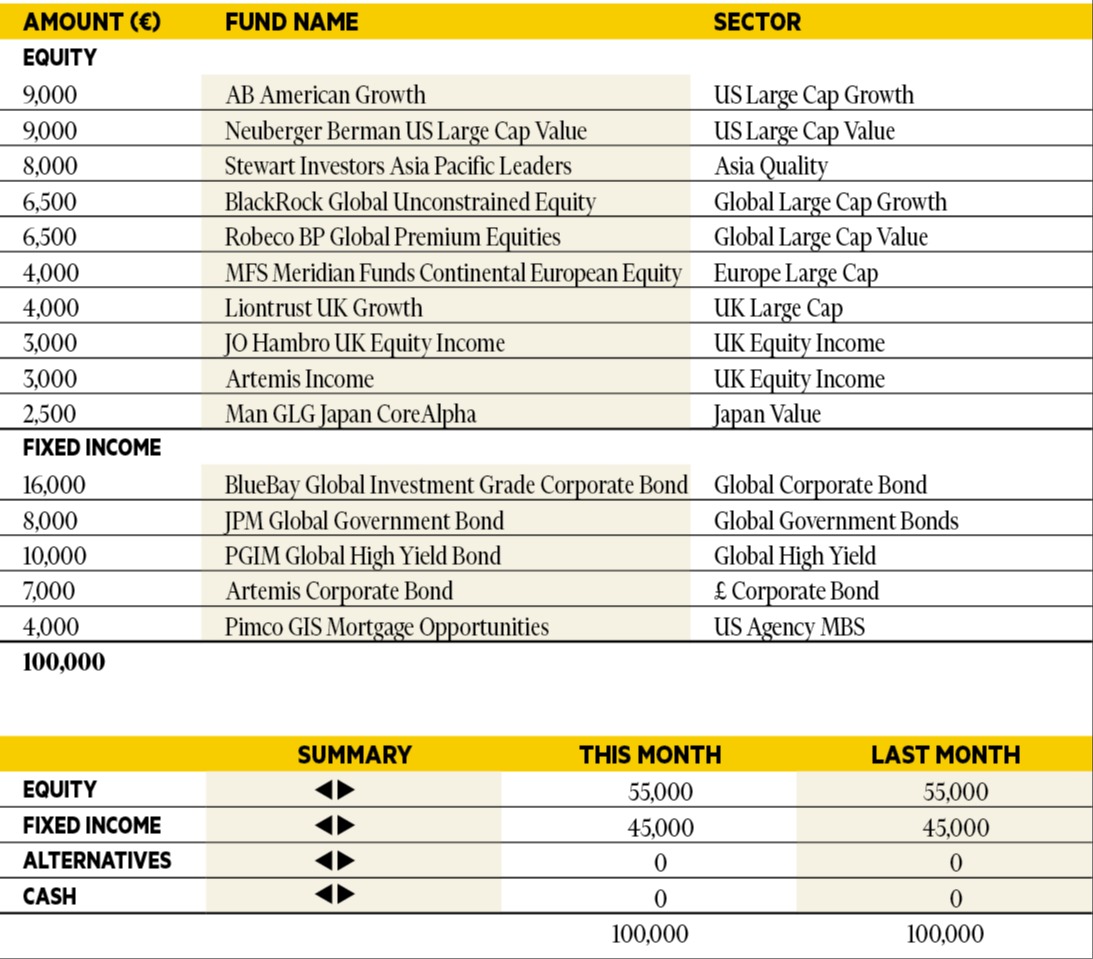
“I’ve stopped staring at a sea of red for a few minutes to write this comment. That’s probably a good thing; the end game for tariffs and trade wars has too many known unknowns, — never mind the unknown unknowns — to pick over. Obsessing over minute-by-minute price moves, news updates, and opinions isn’t conducive to clear thinking and good decisions. Our portfolio is set up for the long-term. Exposure to equities and credit is relatively high, so risk-off events are neither welcome nor helpful. But they’re inevitable; we accept this and don’t panic. We have a sensible long-term allocation and high-quality managers who can hold up well and capture any recovery. So, I’m going to follow the advice of someone who taught me a lot and I respect greatly. They’ve just written some views on the latest turmoil and lessons from six decades of investing: ‘sit tight and do nothing’.”
Antti Saari
Chief Investment Strategist, Nordea investments.
Based in: Copenhagen, Denmark

“Equity markets continued growing in July. The trade agreements that the US has made so far indicate that it will impose a tariff of around 15 per cent for most countries and products. This is high, but lower than feared and, importantly, the uncertainty surrounding the global trade regime has been significantly reduced. At the same time, ongoing key figures and the current earnings season suggest that economies and businesses are handling the trade unrest better than feared. Increased tariffs will slow growth, but once businesses and consumers have adapted to higher tariffs, growth will pick up again, aided by more stimulative economic policies. As a result, we are lifting equities to overweight versus bonds.”
Didier Chan-Voc-Chun
Head of Multi-Management and Fund Research at Union Bancaire Privée (UBP).
Based in: Geneva, Switzerland
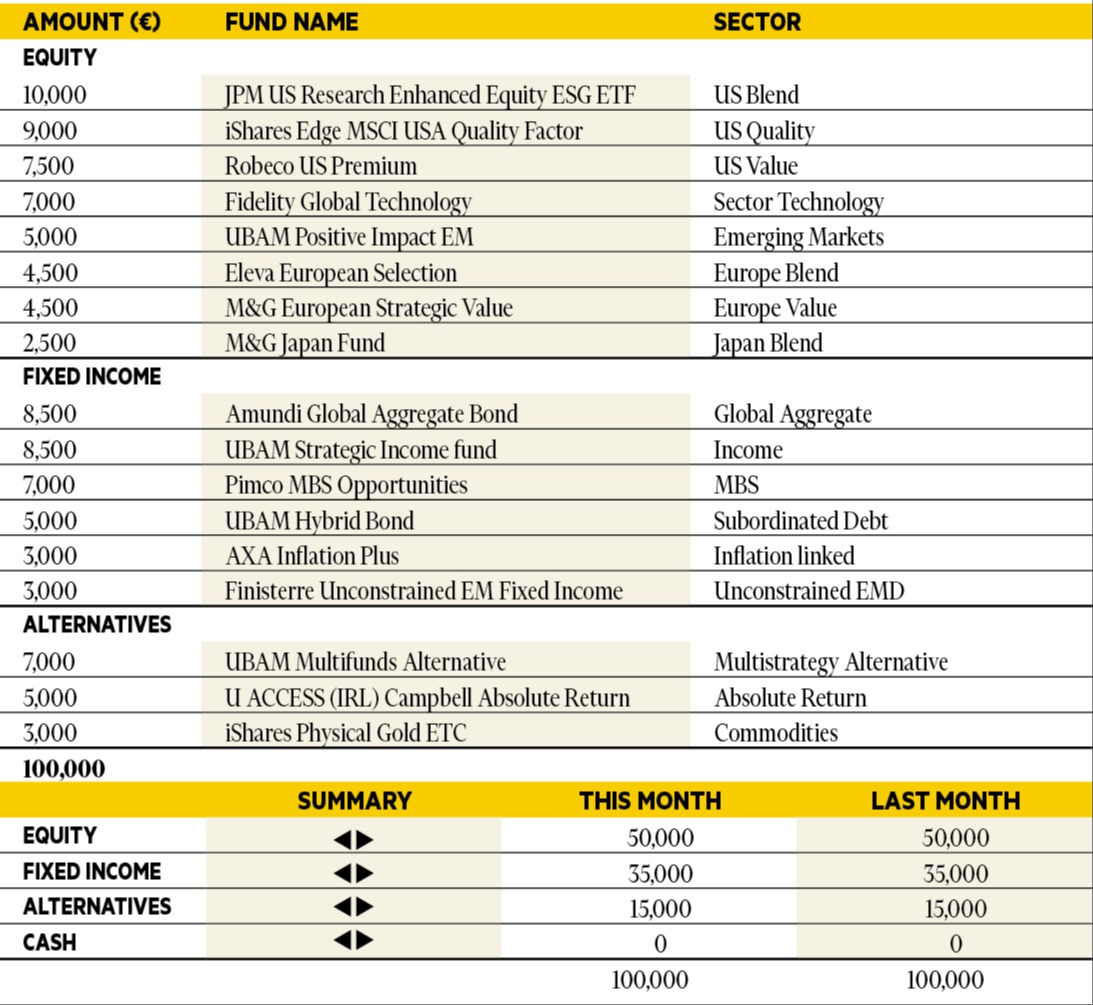
“In July, the passage of the One Big Beautiful Bill Act in the US brought more clarity to the country’s fiscal policy. The list of US-negotiated trade deals continued to grow, though uncertainty persisted with several key partners. Global developed market equities rose 1.4 per cent over the month. At the same time, investor focus shifted back to economic fundamentals, following the release of softer-than-expected US employment data. Finally, recent tech earnings results reaffirmed the sector’s enduring dominance. We left our portfolio unchanged.”