Eyes of the Law: Hong Kong hotelier turns impact investor
Elisa Battaglia Trovato

Allen Law’s journey as an entrepreneur and impact leader began in 2003. Fresh from a mathematics degree at King’s College London, he was planning a career in actuarial science, when a call from his father changed his plans. The Sars outbreak had brought Hong Kong, his birthplace and family home, to a standstill, hitting tourism and hospitality especially hard. The family had just acquired the struggling Tsim Sha Tsui Park Hotel. “We bought this hotel, but none of us wants to learn how to run it,” his father said. “It’s time for the next generation to step up.’”
While the family’s roots were in garment manufacturing and real estate, Mr Law, driven by a sense of duty, took on the challenge. “I call myself an accidental hotelier,” he says, calm and grounded on a video call from Singapore where he now lives. “It wasn’t what I had planned. Thrown into the deep end, I had to figure it out fast.”
His independence was forged early. At age 13, he left Hong Kong to attend boarding school in the UK. “It was before smartphones. I had to solve every problem on my own. That’s when I learned independence.”
Mr Law’s parents, both of whom left school early, were determined he would receive the education they missed. Before the 1997 handover, British boarding schools offered Hong Kong’s elite a coveted path to opportunity.
Back home, Mr Law fast-tracked a two-year hotel management trainee programme into one, working across every department, from the bell desk and reception to sales, marketing and even engineering. Within a year, he pitched a plan: rising disposable incomes and budget airlines would drive a tourism boom across Asia. He proposed a fund to seize the opportunity and the family backed it.
In 2005, at just 25, Mr Law led the S$300m ($233m) acquisition of the Grand Park Orchard on Singapore’s Orchard Road — the city’s premier luxury shopping street — and soon relocated to manage it. It was a record deal at the time. “Local players weren’t willing to pay that price. Then this ‘random guy from Hong Kong’ steps in and takes over this gigantic project,” he recalls, smiling.
The tired four-star property was transformed by Mr Law and his team into a five-star hotel with high-end retail space, now home to flagship tenants including Apple. As Singapore’s economy surged — fuelled by new integrated resorts with casinos and entertainment venues aimed at Chinese visitors — the hotel’s value tripled, selling for more than S$1bn in 2013.
Mr Law went on to expand into new markets across Asia, laying the foundations for a hotel portfolio that now spans 30 properties in 11 Asia-Pacific locations, including Singapore, the Maldives, Hong Kong, China and Japan.
Entrepreneurial spirit
Mr Law traces his entrepreneurial mindset to his grandfather, who migrated from China to Hong Kong “with nothing” and built up a thriving garment business. “From when I was young, I heard stories of hard work and determination. That’s when I came to believe that if you have a big dream and work hard, you can make it happen,” he says.
Yet, he is mindful of the Chinese adage that wealth rarely survives three generations. “From day one, I told my parents: I’ll do all I can, but I won’t let it die on mine.”
Despite access to capital, Mr Law remains prudent. His investment strategy prioritises wealth protection over aggressive growth. “We assess every deal for risk-adjusted return. Sometimes we stop chasing when the price goes beyond what we feel comfortable with. We don’t have any hard feelings about it.”
Two years ago, he began expanding into wellness. “We have this family philosophy: one family member, one business unit,” he says. With six members in the previous generation, 20 in his, and more to come, diversification is essential to avoid conflict and preserve harmony.
Fitness was the first step. “Our hotels had gyms or spas, but only as a small add-on. It was low-hanging fruit — familiar, but never standalone.”
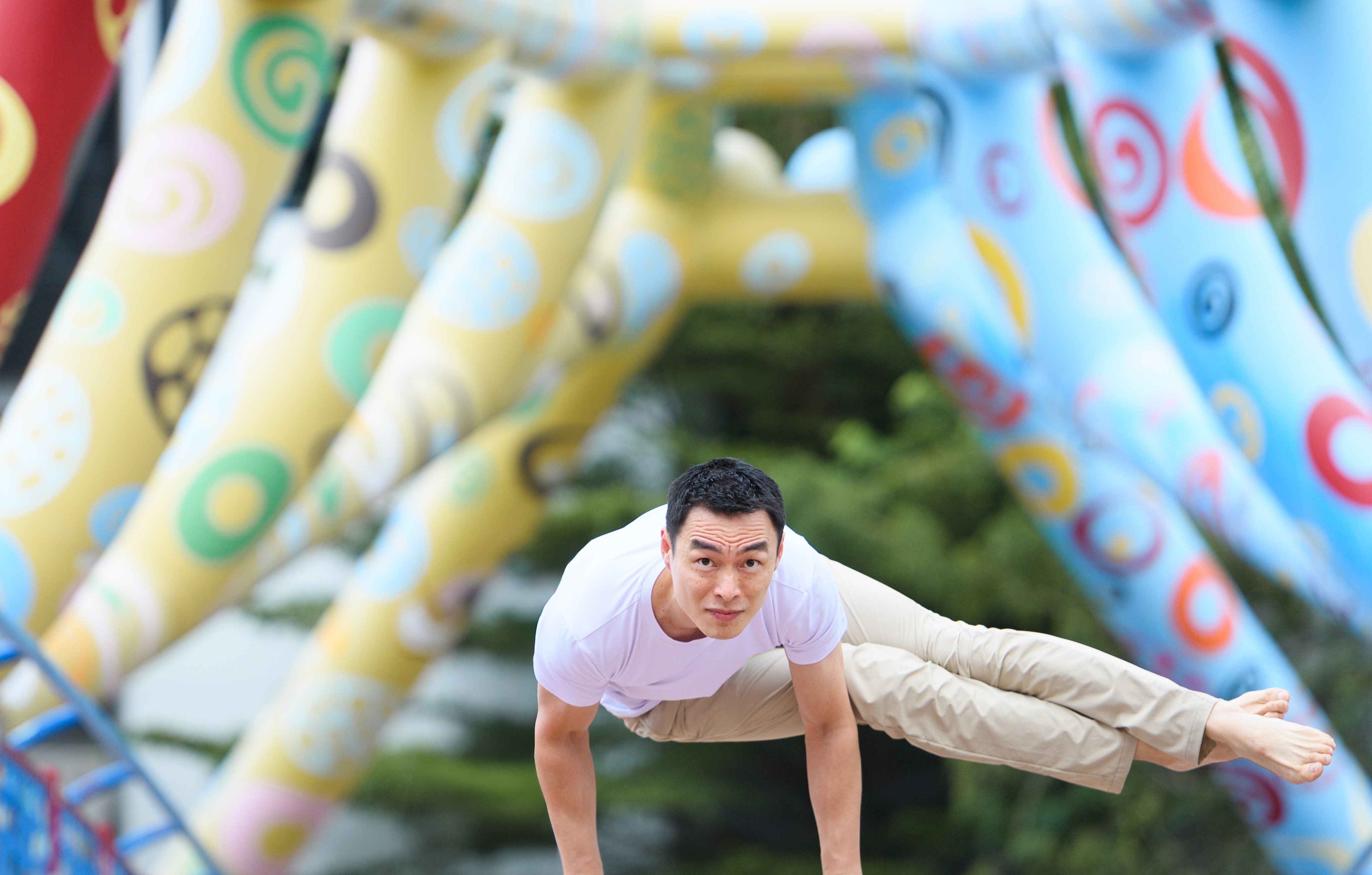
A passionate athlete who works out six times a week in yoga, gymnastics and athletics, he co-founded MOVE [REPEAT], a platform helping boutique fitness brands grow. It now runs more than 50 fitness studios in five countries, with plans to double that within a year. “You can be a runner, yogi, cyclist — our goal is to help people adopt a healthy, active lifestyle. We tell our customers: just move and repeat.”
He was also recently appointed chairman of Revl Training, a rapidly growing premium boutique fitness brand.
Wellness beyond fitness
But for Mr Law, wellness goes far beyond fitness, reflecting his broader ambitions. Later this year, he will launch a large-scale longevity medicine centre in Singapore, offering a “holistic approach” to long-term health. The facility will combine diagnostics, medical services, exercise, nutrition and recovery treatments, supported by bio-tracking and AI coaching.
Additional centres are planned for Hong Kong, Australia, China and elsewhere in Asia-Pacific. “Most people don’t see a doctor until symptoms appear. We want to change that.” His goal is to promote “chronic health”, a model focused on prevention and sustainable wellbeing, aimed at reducing dependency on long-term medication.
Wearables and apps produce huge amounts of personal health data, but most people don’t know how to use it. The real opportunity is turning that data into personalised, actionable guidance
Each customer journey will begin with a full assessment of biometric data, physical condition and mental health. The insights will guide personalised consultations tailored to individual goals, from weight loss to managing chronic conditions like diabetes.
“Wearables and apps produce huge amounts of personal health data, but most people don’t know how to use it. The real opportunity is turning that data into personalised, actionable guidance,” states Mr Law.
Technology will be central to scaling impact and lowering costs. A 24/7 digital platform with an AI health coach will support patients while helping doctors operate more efficiently. “It’s about making our physicians ten times more effective,” he says.
Delivery matters just as much as data. “People need help, someone to buddy them along their health journey. Sometimes it’s not about the message, it’s about the messenger.”
Unlike typical longevity clinics geared to the wealthy, Mr Law wants inclusivity. “We’re designing pricing models to make services affordable for the middle 50 per cent. That’s where the real impact lies.”
From start-up to rollout
While he does not operate a formal family office, Mr Law is actively investing and building fast-growth companies, both organically and through M&A, centred on the expanding longevity economy. According to UBS, this demographic-driven megatrend could prove as transformational as the global AI revolution, with an estimated market value of $8tn by 2030. This vast opportunity spans healthcare, consumer goods, financial services and real estate, driven by rising demand for health, wellness, and senior living solutions (see charts).
Mr Law recently launched Seveno Capital, a $70m venture fund backing early- and growth-stage companies focused on extending the human health span. Operating businesses are held directly; venture investments are managed through the fund.
Start-ups must first demonstrate a meaningful impact on human wellbeing before financials, scalability and rollout plans are considered. But impact alone is not enough, he adds. Each investment must be financially sustainable to succeed.
Early investments include a Japanese start-up making nature-based retreats more accessible to city dwellers, and a turnkey provider of medical-wellness solutions which helps hospitality owners tap into ‘longevity tourism’ and unlock new revenue streams.
Across all his wellness investments, the principle remains consistent: purpose first, underpinned by financial discipline. He sees ‘new wellness’ — the convergence of diagnostics, AI and preventative care — as central to the family’s long-term impact strategy.
“Money matters to everyone, but I’ve seen with my grandfather and father that adding another zero to the bank balance doesn’t change how we live. So, the question is, how can we use wealth to create meaningful impact?”
His family’s long-standing support for education and healthcare continues through their Foundation. But philanthropy alone is not enough, he argues. “Charity alone reinforces old systems. We need systemic change.” That, he argues, requires a new mindset.
“Governments and traditional institutions focus on existing challenges within old systems. It takes entrepreneurial spirit to disrupt that.”
Mr Law sees the “sick care” model as outdated. As life expectancy rises but health span lags, people are living longer but falling ill earlier. The gap between life expectancy and health-adjusted life expectancy has widened from 8.5 years in 2000 to 9.6 years in 2019, a 13 per cent increase over two decades, according to a Mayo Clinic study.
“We’re trying to close that gap,” says Mr Law. “Living healthily is more important than just living longer.”
Conservative investments
Alongside his wellness and hospitality ventures, Mr Law maintains diversified, conservative portfolios managed by private banks. His holdings favour firms with strong environmental, social and governance (ESG) standards, avoiding sectors such as oil and gas. “Operating businesses are higher risk and less liquid, so our bank portfolios are more conservative. It’s about balance.”
His portfolio combines core public equities with private equity investments, the latter offering exposure to sectors beyond their areas of expertise through their operating businesses.
A clear investment philosophy guides his strategy: “Know your risk tolerance, goals and the volatility you can handle. It’s always about balancing risk and return,” he says.
“With significant wealth, even a 0.5 or 0.3 percentage point difference in returns matters.”
Working with multiple wealth managers in long-term relationships helps Mr Law gain different perspectives and manage risk. “Every bank claims to be number one at something, so the data starts to feel meaningless,” he says. “Ultimately, what matters is trust. You want to be one of their first calls when markets shift.”
The three words I tell myself every day are: heal the world
This structured approach also informs succession planning. “Most discussions have been with my 70-year-old father and us siblings. We use private bankers as sounding boards. My children are still too young for those conversations.”
At the heart of Mr Law’s approach is a clear purpose. “The three words I tell myself every day are: heal the world.” It is a mantra he returns to each morning after meditation, before focusing on ventures he believes can change lives.
But the journey is rarely a smooth one, he admits. “Every time I try something new, I expect a thousand negative comments. But I believe in the mission. I don’t have all the answers — we’re on a journey of discovery,” he says, always mindful of overconfidence.
“You don’t want to charge down the road and end up in trouble. If something’s working, build on it. If not, fix it fast.”
Mr Law sees himself as a “servant leader”, there to empower, not command. “One person can only do so much. I want to serve my people, my leaders, my team members, so they can bring great results. If each of them multiplies by ten, and that multiplies again, that’s how real impact happens.”
Recognition, he adds, is not the goal. “I don’t think about legacy. If we deliver impact, that makes me happy. Chase glory, and it’s ego. Do the work well, and perhaps our children may be proud, and recognition may follow.”