Power to the people: investing in energy dynamics
Yuri Bender

With the stand-off between the US and its economic rivals gathering intensity, the energy dynamics linking Washington to China and India are coming under increasing scrutiny.
Wealthy investors looking to back the world’s two greatest developing economies are sitting up and watching events unfolding in Beijing and New Delhi, as well as Washington.
Sharmila Whelan, an independent global macro strategist at Westbourne Research Services, has worked in both countries and monitors their economic developments closely, on behalf of family offices keen to take the temperature and invest in rising powers.
Looking first at India, against which US President Donald Trump has raised import tariffs to 50 per cent, as punishment for purchases of Russian oil following Moscow’s invasion of Ukraine, Ms Whelan points out that New Delhi presides over a predominantly domestic demand-led economy.
The US accounts for just 18 per cent of Indian exports, lower than the percentage for Japan and Korea. Moreover, at 12 per cent, exports as a share of Indian GDP are dwarfed by Taiwan’s 63 per cent and 50 per cent for the EU. This she says, suggests the “ripple out” effect on the broader Indian economy will not be too significant.
Rude health
The Indian corporate profit cycle, says Ms Whelan, is going from strength to strength. “India was one of few countries where average return on equity for the listed sector actually strengthened further in the first half of the year,” she says. “Corporate balance sheets are also in rude health in terms of debt leverage being very low. The investment cycle is still subdued, but there are signs of it picking up.”
Discretionary spending will also likely be further boosted by an extra 25 basis point rate cut from the Reserve Bank of India later this year, with household credit growth picking up. Unlike last year, when rural spending was hit by a poor harvest and volatile weather, this year’s harvest has proved more promising, helping keep inflation in check.
“The 50 per cent tariff will hurt and is most unwelcome,” says Ms Whelan. “But does it derail the India story? I would say no.”
For international investors, she suggests underweighting exports and cyclicals in India, but investing in industrials, consumer durables and real estate companies.
“The 50 per cent tariff will hurt and is most unwelcome. But does it derail the India story? I would say no
While nobody is going to argue that India’s likely transition away from fossil fuels is bad news, the bigger question, she asks, is: how fast India transition can away from its traditional energy sources.
“The answer there is not very quickly at all. They are way, way, way behind China, particularly in terms of technology and renewable capacity,” suggests Ms Whelan. “The biggest risk of this 50 per cent tariff is not the direct hit to Indian exporters, but if there are sanctions on oil imports, and the US is successful in enforcing sanctions on Russian oil sales to India, when they have so far turned a blind eye, that has much bigger ramifications.”
This would include a negative impact on the balance of payments and the current account deficit. She also fears the potential of rising inflation and the central bank’s ability to contain that. “India does not have as many options as China does, as it is so far behind in the green transition,” she adds.
Green transition
There are other voices, however, who suggest the hastening of India’s green transition by the US sanctions will actually benefit the economy and help reshape its future.
“The Indians and Chinese are financing Russia’s war machine. So from a geopolitical point of view, and being European, I’m very much in favour of sanctions, of second round sanctions, because it’s the right thing to do,” says Beat Wittmann, partner at Porta Advisors in Zurich and a former senior banker with UBS, Credit Suisse and Julius Baer.
“I also think that that India would be economically and strategically stronger if they would not rely on cheap, or artificially cheap, energy from Russia. It’s the same trap that the Germans fell into when they lived from artificially cheap Russian energy, where they were totally dependent. This will make the world safer against these aggressors and will make India economically stronger if they become more resilient in terms of energy production and consumption than to live off artificially cheap Russian energy.”
Another Swiss banker, Ipek Ozkardeskaya, senior analyst at Swissquote Bank, talks about the unwelcome decision which India and its businesses might be forced to take. “India must now weigh the cost of cheaper Russian oil against the risk of damaging relations with an increasingly protectionist US,” she says.
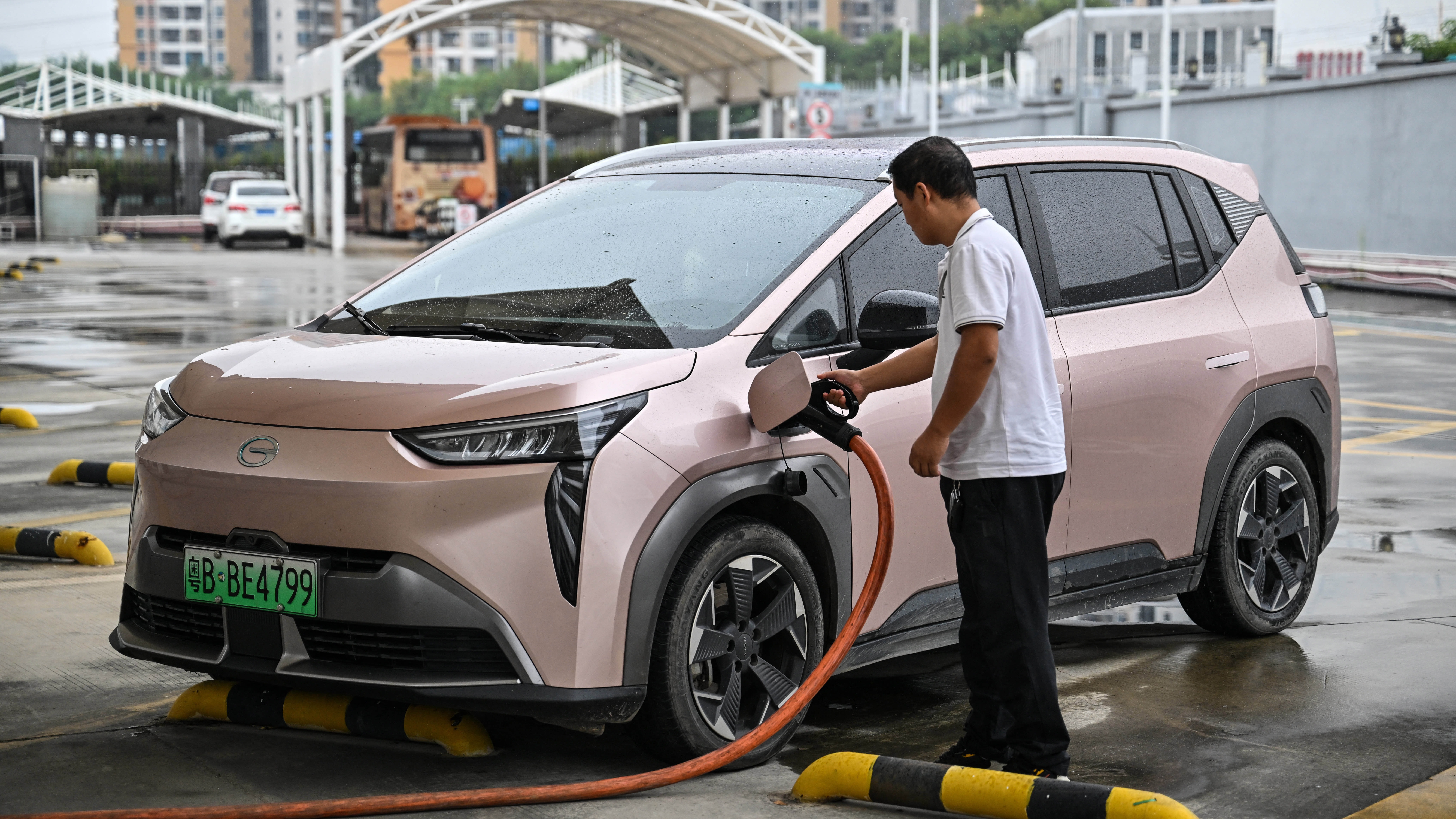
China’s green transition, on the other hand, says Westbourne’s Ms Whelan, is so advanced that the country will no longer have any petrol stations by 2035, following an entire transfer to electric vehicle (EV) technology.
Mindset and preference
“When we look at why EVs are not penetrating Europe faster, it’s not about choice, it’s a mindset and preference in China,” she says.
Analysing the way in which companies are using AI to switch to more efficient energy providers, she says “it’s like Octopus, but a lot more efficient”, referring to the British renewable energy group.
While Europe struggles to overhaul creaking industrial and manufacturing bases, at enormous cost, China is managing to upgrade relatively smoothly, cutting carbon emissions and improving energy efficiency, she says.
“When you look at the AI revolution and the green transition in China, the general population have been much more open to it,” she says. “That’s why you have seen applications develop so quickly in China.”
At Chinese hotels, for instance, room service deliveries are regularly made by robots instead of humans. “They have adapted to making everyday life easier, it’s just natural for them,” adds Ms Whelan.
Chinese factories, she says, are now manufacturing all their tech components internally, flying in the face of the international myth that China makes its living stealing technology from rival markets. A majority of AI talent is now based in the country.
“The gap between the US and China in AI is no longer 10-15 years, it’s just a couple now, and I would say China is ahead of the US in the applications,” she says.
Structural issues
Despite the innovation, China has serious structural issues in the economy, including a major deflationary trend, which often preclude inward investment, says Ms Whelan. Although she recommends family offices to overweight robotics and the related “AI green sector”, every other sector should currently be avoided due to the “economic down cycle, which is worsening”. The challenge for China, she says, is finding global markets for its batteries and applications to make up for the domestic slump.
China is also looking further afield geopolitically, diversifying away from Russian fossil fuels, in addition to progressing its own green transition, says Mr Wittmann at Porta Advisors.
“China is now the largest client of the Middle East, where they have replaced the Americans,” says Mr Wittmann. ‘’The Saudis are a very reliable supplier of oil and they’re not asking the Chinese questions about how they run their affairs, so it makes sense for both parties.
China’s investment through its Belt & Road Initiative in Middle Eastern ports, including the Khalifa Port in the United Arab Emirates, also gives Beijing a major advantage, which it also possesses in its domestic technology, he says.
“From a technological point of view, when you look at China and India in terms of infrastructure, China is so advanced,” he says.
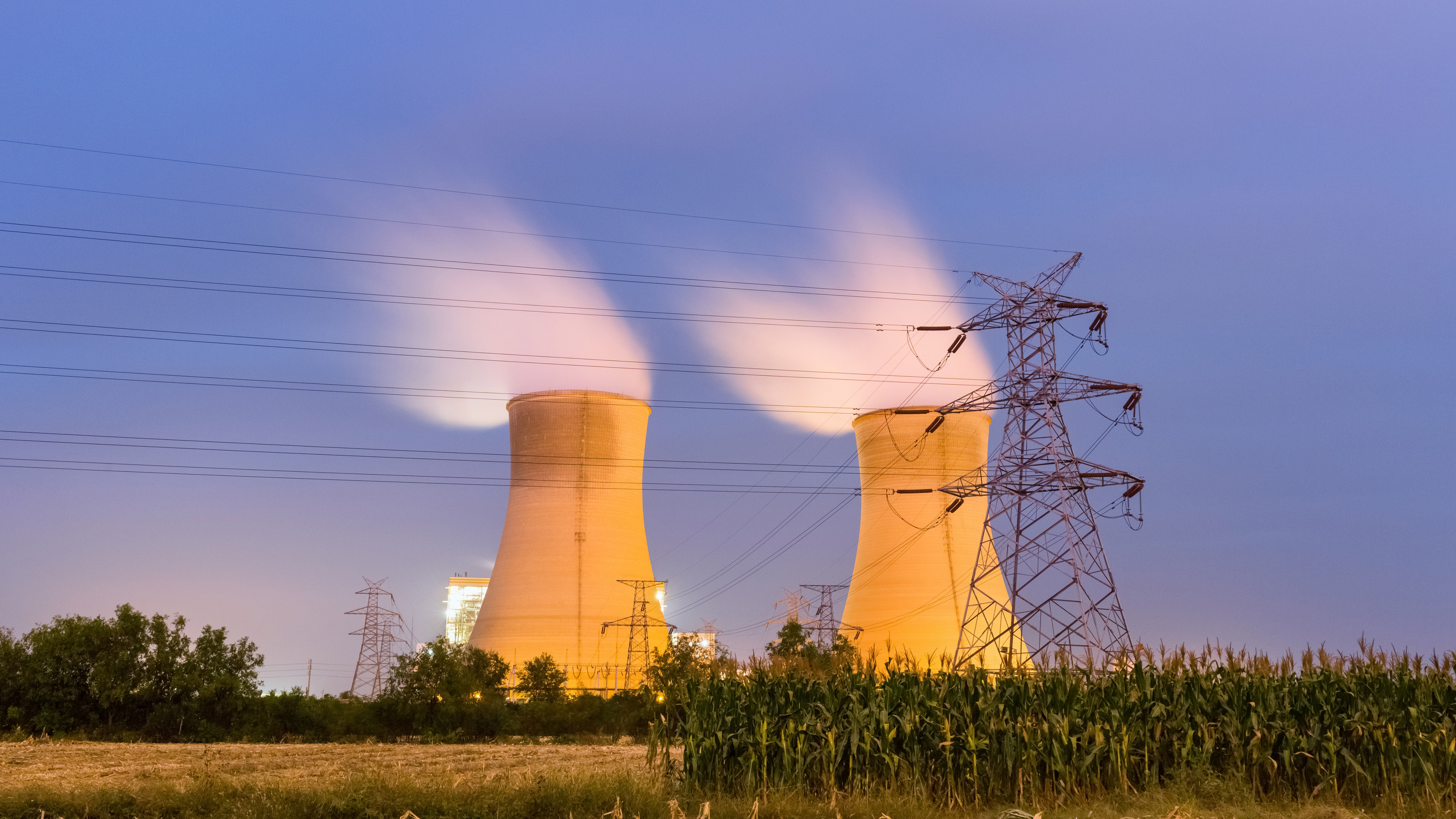
In many ways, believe commentators, China, which was once seen as the world’s greatest polluter, is now setting the world’s clean energy agenda, particularly when it comes to efficiency of industries.
“We’re going to see a lot of money going into wind power and solar power in China,” predicts Amin Rajan, CEO of UK-based asset management consultancy Create-Research. “In fact, the Chinese estimates of the consumption of green energy are well ahead of what they were planning, simply because of the progress that has been made in battery storage of energy.”
We’re going to see a lot of money going into wind power and solar power in China
While Russia and the US will carry on producing “conventional energy”, the rest of the world “will have moved on in the other direction”, says Mr Rajan, with Europe one of the fastest movers.
“That mix is going to change,” he says, with most leading investors in the US agreeing that energy supply and efficiency is now the key determinant of portfolio performance, “even though they are using very guarded language, because they’re afraid,” he says.
“They are not investing outside the US at the moment because they would be regarded as unpatriotic by the administration. So you have politics influencing asset allocation choices and politics influencing diversification.”
Any country that does not change their energy mix fast enough is going to be left behind, he suggests. “You’re going to be marginalised. When you look at nuclear, or renewable energy, the marginal cost of production is virtually zero. The marginal cost of producing [a barrel of] oil in America is nearly $50. Think about that cost difference.”