
Chetan Sehgal, emerging market equities expert at global funds house Franklin Templeton, shares his views about China, India, geopolitics and electric vehicles.
The view from Chetan Sehgal’s office in Singapore’s Suntec City takes in the Fountain of Wealth, a dramatic water feature, representing Hindu values of quality and harmony. He also seeks these virtues in the companies he visits during regular travels around Asia.
During recent visits to China, he was speaking to companies involved in manufacturing electric vehicles, supplying components for batteries, describing the almost instant success of Chinese EVs in Europe as “amazing”.
“You first saw a wave of Japanese cars becoming acceptable, followed by Korean vehicles,” says Mr Sehgal, director of portfolio management for the $10bn emerging markets equity operation of global funds firm Franklin Templeton, and portfolio manager of Templeton Emerging Markets Investment Trust (Temit). Temit celebrates its 35th anniversary this year. “But Chinese cars were accepted in a very short period of time, coming with a new type of manufacture and new type of technology, which is quite an achievement.”
Searching for pearls
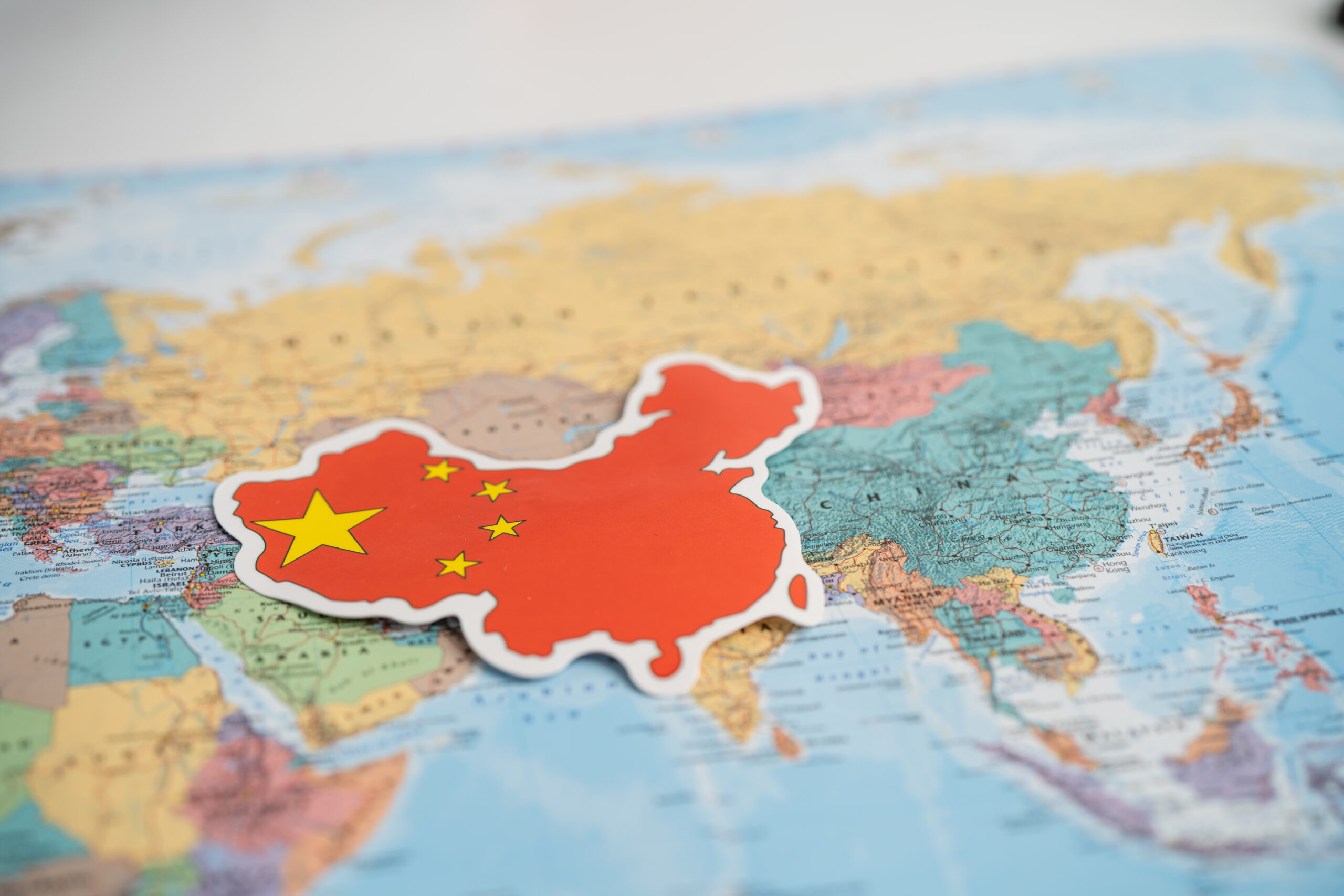
Much of his time these days is spent hunting for investment opportunities in the Pearl River Delta on the mainland, across the internal frontier from Hong Kong. The authorities in Beijing are keen to promote this region as their integrated ‘Greater Bay Area’. But he would like them to be more ambitious in how they project the area internationally.
“Shenzen has developed into a nice city with plenty of greenery, not just a concrete jungle,” says Mr Sehgal, who joined Franklin Templeton in 1995, when Shenzen boasted a population of just 2m, compared to its 17m today, as a leading tech and manufacturing hub.
His disappointment lies in the lack of Western visitors, even as Chinese people from Hong Kong and Singapore throng the region at weekends, to take advantage of cheaper food, accommodation and services.
“You would expect more Westerners, as Shenzen is one of the gateways of China to the rest of the world,” he says, predicting the Greater Bay Area to grow faster than the 5 per cent forecast laid down for the country by the recent National People’s Congress in Beijing.
“If you look at the population over a 15 to 20-year period, you will find there will be a net migration towards the south from the north,” he says, expecting higher growth of up to 2 per cent over the coming decade.
The recent congress has led to an even stronger alignment between country and party, with Beijing now enjoying stronger influence over the economy and society than the provinces had, says Mr Sehgal.
Loss of faith
While he believes “there is no point in evaluating China from a Western or US lens, as democracy is not their political system”, he understands much of the foreign investment community has lost faith with tech firms, previously the mainstay of the Chinese economy.
This sentiment of disenchantment with the market – among both foreigners and locals – is probably at its lowest today, he suggests. Not only are the likes of Tencent and Alibaba innovative firms, “with a large talent base” that helps “generate a lot of cash”, but there is a sense that the government's anti-tech, political clampdowns are on the retreat.
“Previously there was a sense that regulations were detrimental to their progress,” he says. “But I think that seems to have settled down, with a realisation that most of the youth and younger generation have been employed by these companies. There is a realisation of the social benefits of such organisations and the fact that they can drive China’s growth, so that is quite positive.”
The main obstacle to growth of both the market and economy, he believes, is an external one. “I think the number one challenge is really to address the geopolitics of the entire situation and how you navigate that,” he says. “Is the status quo acceptable or not to all parties involved?”
The second, associated factor is competition, with the US sanctioning Chinese companies and restricting access to technology, in the same way Beijing refused to allow Google permission to operate in China, he says.
But he is still keeping long-term faith with the economy, even if there have been tactical investment adjustments recently. “The fact that [the US] have put in place so many tariffs to ensure their industry is viable, shows just how competitive China is in ability to manufacture goods which people want,” he says.
With foreigners having lowered their collective weight in Chinese assets, he believes local Chinese money – currently attracting almost risible yields on bank deposits – will be the first to return.
“I think the bull market in China really has to come from local confidence and that has been missing until now. I mean, that's the secret source, ultimately.”
Indian promise
Many investors, previously comfortable with China are now looking at Mr Sehgal’s home country of India for long-term allocations, he acknowledges. While he studied in both Mumbai and Bangalore, and praises the latter’s tech innovation, typified by Infosys, Wipro and Tata, he warns against unrealistic expectations.
While India has better demographics and a more open society than China, it “has its own challenges,” which could restrict long-term growth, he suggests. “India is a democracy, everything has to go through a process, where it is scrutinised by the courts and put to a vote,” he says.
India can probably grow at 6 to 7 per cent for the foreseeable future, says Mr Sehgal, “but not the nines, tens and double digits which were achieved by China. You have to evaluate India for what it is, and then maybe the valuations are slightly running ahead of themselves, because people have reduced their exposure to China.”
For Mr Sehgal and Franklin Templeton, the Fountain of Wealth will likely have more than one source.