Wealthy families left cold by AI revolution
Ali Al-Enazi

Artificial intelligence is steadily being introduced into core processes at leading private banks. But senior wealth executives warn that the technology’s most compelling promises — fully automated decision-making, proactive advisory agents and AI-driven portfolio management — remain part of a future vision than a present reality.
While AI is already reshaping research, reporting and operational tasks, human oversight and client trust remain essential today’s business model, according to speakers at the PWM Global Wealth Management Summit, held in London in November.
The deployment of AI in a way that is “both exploratory and transformative”, as described by Christian Nolting, global chief investment officer at Deutsche Bank’s Private Bank, is typical of the strategies enacted at most major wealth firms.
Special report
Since 2019, the bank has built out its in-house AI capacity, automating aspects of its research infrastructure and security models. “All models for single securities are run by AI now,” said Mr Nolting, speaking at the summit, noting cost efficiencies from reducing analyst workloads.
Beyond portfolio construction, Deutsche Bank has applied AI in operational workflows. Mr Nolting highlighted the automation of “court-ordered garnishments” in Germany, a process complicated by regional differences, which has freed up compliance and back-office teams.
Yet he stressed that “human oversight remains irreplaceable”: AI can hallucinate, and decision-making still requires safeguards. “If you make a mistake, how do you explain to a client that it was AI, not a human?” he asked.
Three pillars
The AI ambitions of Indosuez Wealth Management in Paris are based around three pillars of client service, portfolio performance and compliance, said Delphine Di Pizio-Tiger, deputy global head of investment management at Indosuez Wealth Management.
Indosuez has partnered with start-ups to build automated reporting tools that summarise key portfolio changes and explain manager decisions in simple language. On performance, it uses AI for risk-on/risk-off profiling. On compliance, the bank now monitors regulatory developments in real time, for example, scanning the website of Luxembourg regulator CSSF on a daily basis.
Others argued that AI adoption is still at an “elementary” stage. At Standard Bank, the focus has been on internal efficiencies: automating meeting minutes, generating client action items and producing research summaries.
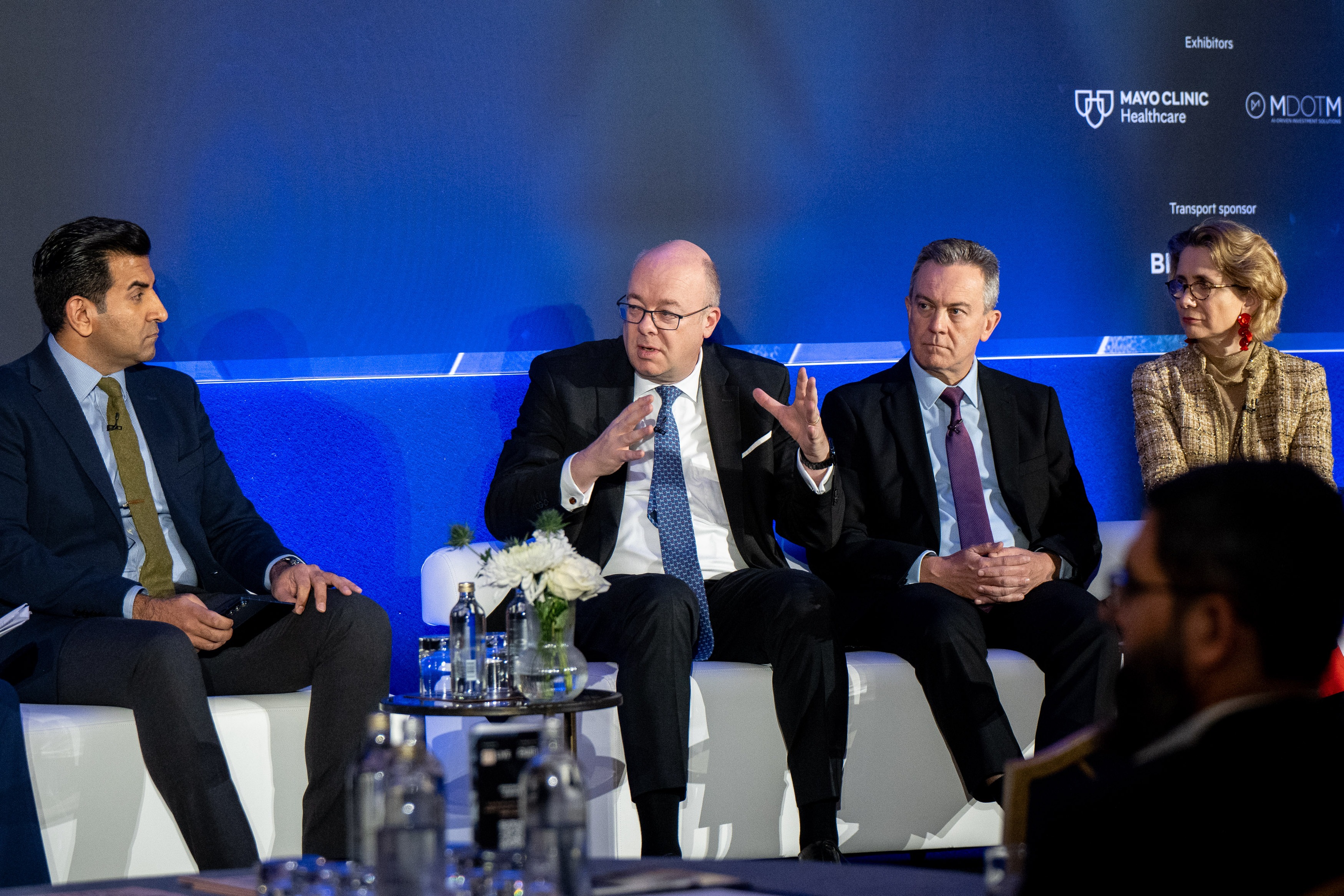
“Hyper-personalisation may be where this really pays off in ultra-high net worth,” said Jacques Els, head of wealth and investment at the South African bank. “You can very easily get swept up by this AI train,” he warned. “You might not have the ROI you envisage.”
Other commentators also echoed this caution. Demand for AI adoption is coming from all corners of organisations, including advisers, portfolio managers, data teams and senior leadership. Yet clients rarely ask for AI-powered services explicitly, said Hassan Suffyan, head of the wealth segment for Emea and Apac at index and data provider MSCI.
“The real driver for many firms is a desire not to lag behind,” he said. For MSCI, the most promising use cases remain anomaly detection in data and generating timely insights for analysts.
But Mr Suffyan warned: “You need grounding in a model; otherwise, hallucinations will emerge.” He called for rigorous validation, auditing and an organisation-wide understanding of AI’s limitations.
Conflicted banks
Panellists were unanimous that AI must not become a “black box”. Transparency, explainability and accountability are non-negotiable. Indosuez wealth boss Ms Tiger was particularly forceful on this topic.
“The client doesn’t want to buy a model they don’t understand. They buy the story,” she said, stressing that portfolio managers must remain able to explain how models work and why decisions are made.
Execution should follow a “human in the loop” model, added Mr Els of Standard Bank, with AI handling low-risk tasks such as reporting, supporting medium-risk tactical decisions and leaving high-risk strategic allocation to humans.
When asked what private banks must do to scale AI responsibly, Mr Suffyan of MSCI emphasised the importance of training and boundaries. Front-line staff need not become data scientists, but they must know how to challenge AI outputs and when to revert to human judgment.
On the future of the industry in 2035, Mr Nolting was cautiously optimistic. “I still see portfolio managers, but their role will shift,” he said. “AI will handle the mechanics.”
A more radical vision was described by Ms Tiger at Indosuez, predicting AI evolving into proactive “agents” anticipating client needs before they arise, a technological revolution which she compared to the Industrial Revolution in the 19th century.
Within the next decade, we will witness the emergence of “truly individualised services” as AI frees up capacity for deeper engagement with clients, suggested Mr Els at Standard Bank. “We’ll look back at 2025 and laugh at how inefficient we were,” he said.