Ahlström family rewrites rules of philanthropy
Elisa Battaglia Trovato

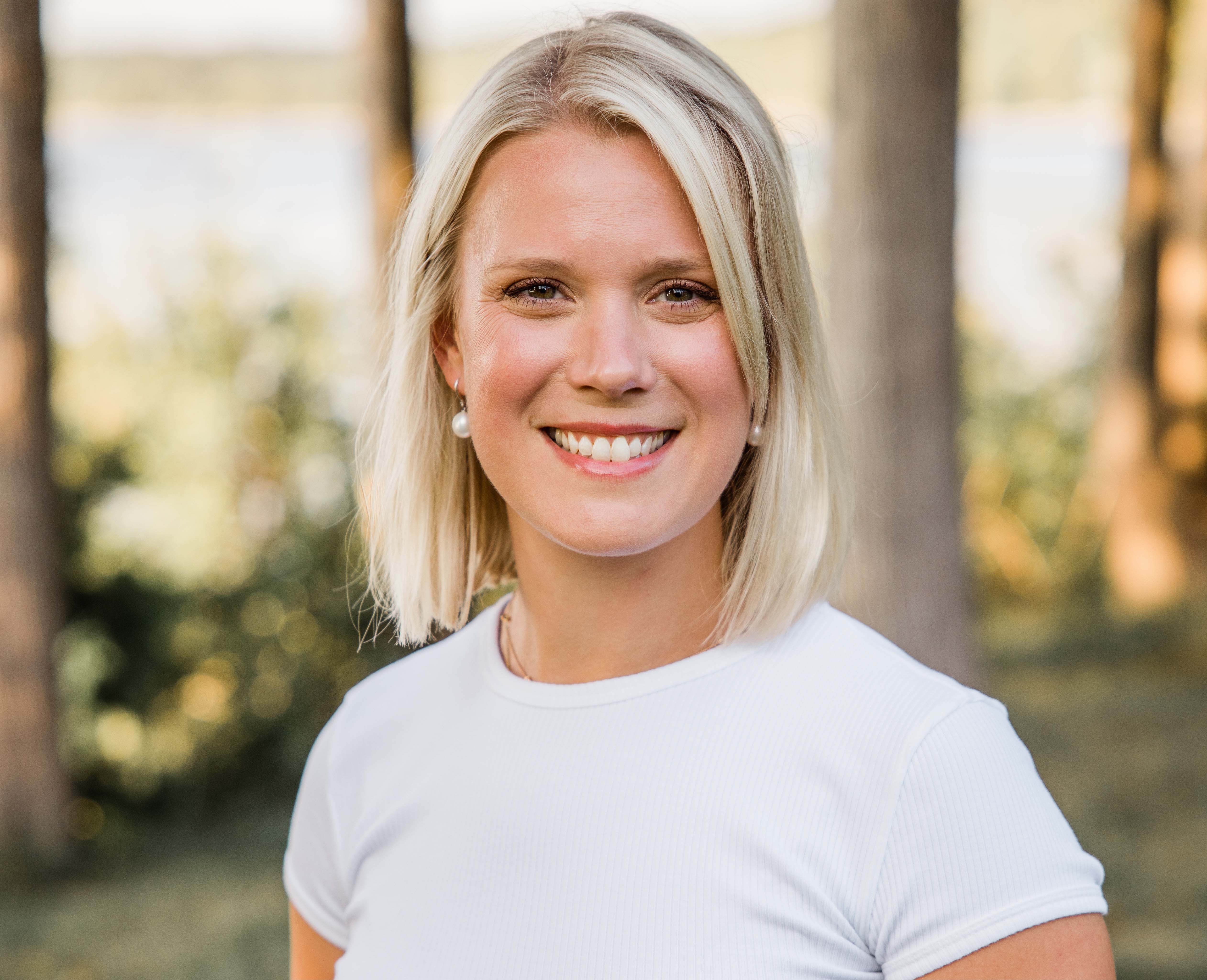
Maria Ahlström-Bondestam, co-founder and chair of the Ahlström Foundation and a fifth-generation member of Finland’s Ahlström industrial family, recalls her first lesson about money came at age five.
After asking her father whether a king could eat all the ice cream in the world, he replied: “Yes, but a good king would teach their children how to make ice cream, so everyone could enjoy it.”
At seven, when a playground slide broke, she was encouraged by her father to find a solution — so she wrote to the president of Finland. He replied by hand, and the slide was repaired. What stayed with her was not the fix, but the sense that she mattered.
Those early experiences shaped Ms Ahlström-Bondestam’s belief that power, whether financial or otherwise, comes with responsibility. “You can use power to benefit just yourself or to benefit many,” she says.
Today, her philanthropic model reflects a growing shift among wealthy families: money alone is not enough. “The solution begins when we act on our values and the good that is within all of us,” she says. Even via video call, her passion for the mission is evident.
This conviction is echoed in a new study from the Center for Sustainable Finance and Private Wealth (CSP) at Switzerland’s University of St. Gallen, and the US-headquartered MIT Sloan Sustainability Initiative. Drawing on the work of French sociologist Pierre Bourdieu, The ‘Investor’s Guide to Multicapital Strategies’ explores how investors can use not only money but also reputation, networks, and know-how to create lasting, systemic impact — and how they often undervalue these non-financial resources.
Four types of capital
Economic capital – financial assets and tangible property
Social capital – networks and relationships that enable collaboration
Cultural capital – skills, knowledge and experience
Symbolic capital – reputation and credibility
Source: CSP - Investor’s Guide to Multicapital Strategies (2025)
“Economic capital may open doors, but it’s social, symbolic and cultural capital that fill the room, with community, visibility and knowledge,” says Kirsten Andersen, CSP’s US-based director of research and lead author of the 2025 publication.
“Modern capitalism gives primary attention to dollars. We haven’t really had a language or paid much attention to the other types of resources that people have, and that includes all of us. Everyone has a variety of these resources.”
What is missing, says Ms Andersen, is a shared language for other valuable, but often “invisible”, forms of capital that people hold. Recognising and combining them intentionally allows individuals to turn one-off acts of giving into strategies for systemic change.
Wealth holders are encouraged to undertake a “capital inventory” — a reflective exercise to assess what they possess, what they can share, and what they lack, encompassing everything from lived experience to relationships and influence.
“Creating that inventory helps people see their resources in a new light,” explains Ms Andersen. “It’s not about giving everything away; it’s about deploying what’s most effective for the change you want to see.”
Five insights from practice
Values and early experiences shape how all capitals are deployed
Each capital type has unique “superpowers”
Combining capitals can accelerate — or, if misaligned, compromise — impact
Systems awareness enables effectiveness
Multicapital deployment can produce systemic, not just individual outcomes
Source: CSP — Investor’s Guide to Multicapital Strategies (2025)
Scaling impact
Beyond individuals, she stresses the importance of collaboration and “coalition building” — aligning stakeholders, who complement each other, to achieve goals which none could realise alone. Often, it is the non-financial forms of capital that amplify financial ones.
Systems awareness — the ability to understand why systems fail — is equally critical. “Once you map the root causes, you begin to see how crises are interlinked,” says Ms Andersen.
One key insight from the CSP report is that the main power of capital lies in its ‘relational’ value. “There is no reputation without a community that values it,” says Ms Andersen. “The usefulness of resources depends entirely on the community you engage with.”
This approach has enabled Ms Ahlström-Bondestam’s foundation to scale impact through partnerships. In India, a €200,000 ($230,000) Unicef-backed pilot reached 40,000 children and catalysed more than $100m in government investment, impacting 10m lives, she says.
“We knew we had the political, financial and social capital, but not necessarily the knowledge,” says Ms Ahlström-Bondestam. “Unicef had the expertise and the mandate to hold governments accountable for children’s rights.”
In Vietnam, a similar collaboration with Unicef and a handful of local families helped tackle disability stigma and shift social attitudes. Teachers, parents and politicians engaged, and children once kept at home began attending school. “This was real systemic change. But you need political momentum in the country or project. That’s what allows results to really take off and change things on the ground.”
Returning to Finland after two decades abroad, Ms Ahlström-Bondestam brought a heightened awareness of inequality and human vulnerability. With access to wealth and influence, she felt her family had both the means and duty to act.
Dismantling the patriarchy
In 2010, she co-founded the Eva Ahlström Foundation with 25 female cousins, focused on supporting women and children, “the most vulnerable in society, whether in peace or wartime”.
“Even though my great-great-great-grandfather was a feminist and progressive, our family had become patriarchal. It was time to change that,” she explains. “At first, the men didn’t take us seriously.” Today, all 450 family members are on board. “It’s unified the family in ways we never expected.”
She believes children’s wellbeing underpins all progress on the UN Sustainable Development Goals (SDGs). “If you apply a children’s lens, you see how every SDG — from clean water to decent work — directly impacts children.”
This philosophy now informs each of her family’s 11 companies, which operate across 32 countries in sectors including forest products and fibre, industrial technology, speciality paper and waste solutions. “We’re not 100 per cent there yet, but it’s in our investment toolkit. You can’t close a deal unless certain boxes are ticked.”
This shift has required internal education. “Employees and shareholders need to understand why we’re doing this. Otherwise, they just ask, ‘Where’s my dividend?’ Businesses need stable societies just as much as societies need flourishing businesses,” she adds.
To bring values to life, she launched the Ahlström Collective Impact initiative in 2020, encouraging companies and stakeholders to align with the SDGs.
The family’s guiding values are ambition and responsibility: “Ambition to be the best version of yourself, and responsibility to society, our company, co-workers and family.”
Staff are encouraged to support the SDGs through both funding and awareness. “The most powerful thing people can do is understand children’s rights and apply that knowledge in daily life.”
Reframing philanthropy
Although she trained as a nurse, Ms Ahlström-Bondestam now serves on the family company’s supervisory board. “My role is to ensure we do things in ways we, and the next generation, can be proud of. Philanthropy shouldn’t be necessary if business were done in a sustainable and fair way,” she says.
Still, wealth managers have a role to play, if they are willing to evolve.
“They need to educate themselves,” she argues. “If they don’t understand children’s rights and why they matter, they can’t advise with that lens.”
“Advisers tend to start with money,” says CSP’s Ms Andersen, “when they should begin with values and early life experiences.” Many of her study interviewees spoke about formative childhood events that influenced how they use their wealth.
Symbolic capital — such as reputation, credibility, or a family name — can also be powerful, when used ethically. “It’s sad in a way, but it helps,” says Ms Ahlström-Bondestam. “When a peer speaks to a peer, you’re listened to. If they like what they hear, they join. If not, they don’t. But as peers, we speak the same language.”
She views education as essential to democracy and peace. “Seven out of 10 children in lower-middle-income countries can’t read or understand a simple text by age 10. If you can’t read, you can’t think critically. Our democracies are at risk because of that.”
Supporting universities and young politicians is vital, she says. “Most politicians start out wanting to make a difference, but today they face so much hostility. We need to back the good ones, or the bad ones will win.”
Values and storytelling also play a central role in fostering intergenerational cohesion. “We rediscovered Eva Ahlström, the wife of our founder and Finland’s first industrial female leader. She had been forgotten for generations. Now she’s an equal partner in our family story,” says Ms Ahlström-Bondestam, explaining the name of her foundation.
Capital of culture
Cultural capital is the most overlooked form of wealth, says CSP’s Ms Andersen. “It’s the one people least consider as a deployable resource, yet it often ends up being the one that makes such a pivotal difference.”
She also wants to expand the definition of value. “People talk about time, treasure, and talent. The multicapital framework calls them ‘capitals’ — and puts them on an even field with money. Part of the reason why money is king is because it’s measurable. We need the same clarity for other resources.”
When a philanthropist partners with a university to base decisions on evidence, that is cultural capital in action, she explains. When someone shares insights in a book, they are turning knowledge into a tangible tool.
For Ms Ahlström-Bondestam, success is measured in people inspired to act. “Every person who starts a foundation, applies a children’s lens to their company, or simply realises they can make a difference — that’s impact for me.”
Though she has considerable influence, she dislikes the label “philanthropist”. “I prefer to say I want to be a decent human being. We’re born into such different realities. It’s about being the best you can be within your reality and using the power or capital you have to benefit many.”
One barrier to change, she notes, is that “the elite has always wanted to keep power for itself”.
Still, her work and recent experience as chair of the Unicef International Council — a community of more than 150 affluent families supporting children’s rights — have shown her that “most wealthy people are good people who appreciate their good fortune and want to share it”.
The challenge, she says, is inspiring more to act: “Many don’t change,” she admits, “but I have hope in the next generation. They’re smarter, more open and more purposeful. They want to be in business, but they want to do good — and that gives me hope.”