Why private investors are staying closer to home
By Joseph von Maltzahn and David Green-Morgan

Rare opportunities to own prime real estate are being seized by private investors buying into unique domestic deals.
From downtown Munich to prime central Paris and London's Mayfair district, more private investors are becoming proud owners of trophy assets without boarding a plane. In Berlin, the German Schoeller Group is now in line to buy the city’s Upper West tower for more than €400m ($435mn).
We’re seeing more domestic family office and HNW bidders at the table. Repricing, along with some pretty rare divestments by sellers, have combined to make it a fairly unique moment for private capital to unlock opportunities in many prime markets.
Our calculations reveal that over the past 10 years, more than 60 per cent of all investment by private investors has been within their home market.
In Germany alone, private investors closed €4bn of deals across all property classes in 2024, according to JLL. One of the most eye-catching transactions was the Strüngmann brothers’ circa €700m purchase of central Munich’s Fünf Höfe high-end retail complex from Union Investment. Munich has also seen Erich Schwaiger, a local private investor, acquire a building for around €80m in the city’s Rosenstrasse.
Real estate now represents 10 per cent of portfolios for family offices, according to a recent study by UBS Global Wealth Management. More broadly, global private wealth grew by around 190 per cent between 2007 and 2023, yet only 5 per cent remains allocated to real estate, according to JLL’s Global Capital Outlook.
One of the major attractions of direct real estate is its low volatility and consistent returns over the medium to longer term, reducing risk in a balanced portfolio. Direct real estate also provides private investors with a way to improve returns through active asset management.
Emotional element
There’s a natural pride for private capital in owning prime assets in a home city or country.
For a French investor, owning a part of prime central Paris can often represent a badge of honour and an asset for the generations. In Paris especially, they will not get that many opportunities.
At the same time, private investors’ high level of agility allows opportunities — particularly off-market — to be seized quickly when they arise.
Being able to pivot and change strategy at speed is a string to their bow, alongside confidence in a decision. Many institutional investors are trying to meet return expectations over a defined period, whereas private investors can have a generational investment horizon.
Unsurprisingly, those private investors who directly invest in real estate have a clear preference for office, retail and hospitality.
They have been more reluctant to invest in emerging property types such as data centres and infrastructure, although there have been isolated investments. Overall, we estimate that offices make up more than 40 per cent of all private investment, with some landmark transactions particularly in London (the so-called Cheesegrater and Walkie Talkie) and Hong Kong (The Centre).
Direct real estate investment in locations where there is higher liquidity, such as in central business districts, has increased by 60 per cent plus in Europe over the past year, much more than the market recovery of 14 per cent.
Pretty vacancies
Of course, there are risks around vacancy, but those are heavily diminished in core locations as occupiers seek ‘live-work-play’ environments for employees. The office market has become bifurcated between top quality buildings and everything else.
While risks of oversupply exist, this is not the case in the prime/core of city centres, where supply is constrained with no new land, tight control of urban planning. Also, higher construction costs, likely to increase under any tariff/trade war environment, will keep a lid on new construction.
It is important to remember real estate is cyclical, with the bottom of the cycle providing the best opportunities. Investors will need to keep a watchful eye on macroeconomic factors. If inflation and interest rates rise again, real estate could underperform other asset classes. However, the best quality and better located assets — which private investors are focused on — should prove more resilient.
At the same time, while average office market pricing in ‘gateway cities’ is down on average 30 per cent, some distressed assets offer bigger discounts. Quick moving private investors can take advantage.
Depth of knowledge
While real estate is not risk free, use of local knowledge allows private investors to take full advantage of their skills and experience close to home.
As the number of family offices and private individuals able to purchase direct real estate has expanded over the past 20 years, so has their sophistication and decision-making ability.
Many second and third generation family members have gained valuable experience working within some of the largest financial and asset management companies in the world. They have acquired multi-country and multi-asset investment experience. This, coupled with access to improving quality and quantity of real estate data and intelligence, has seen an increase in transactions.
Real estate has to compete with opportunities available in other asset classes, be that public or private equity, venture capital, vintage cars, wine and art. Private investors though continue to appreciate the benefits of direct real estate investment as part of their overall portfolio whether that be as part of their operating business, personal use or purely as an investment.
In the early days of 2025, what’s clear is that a growing number of private investors are seeking to add more high-quality real estate to their investment portfolio.


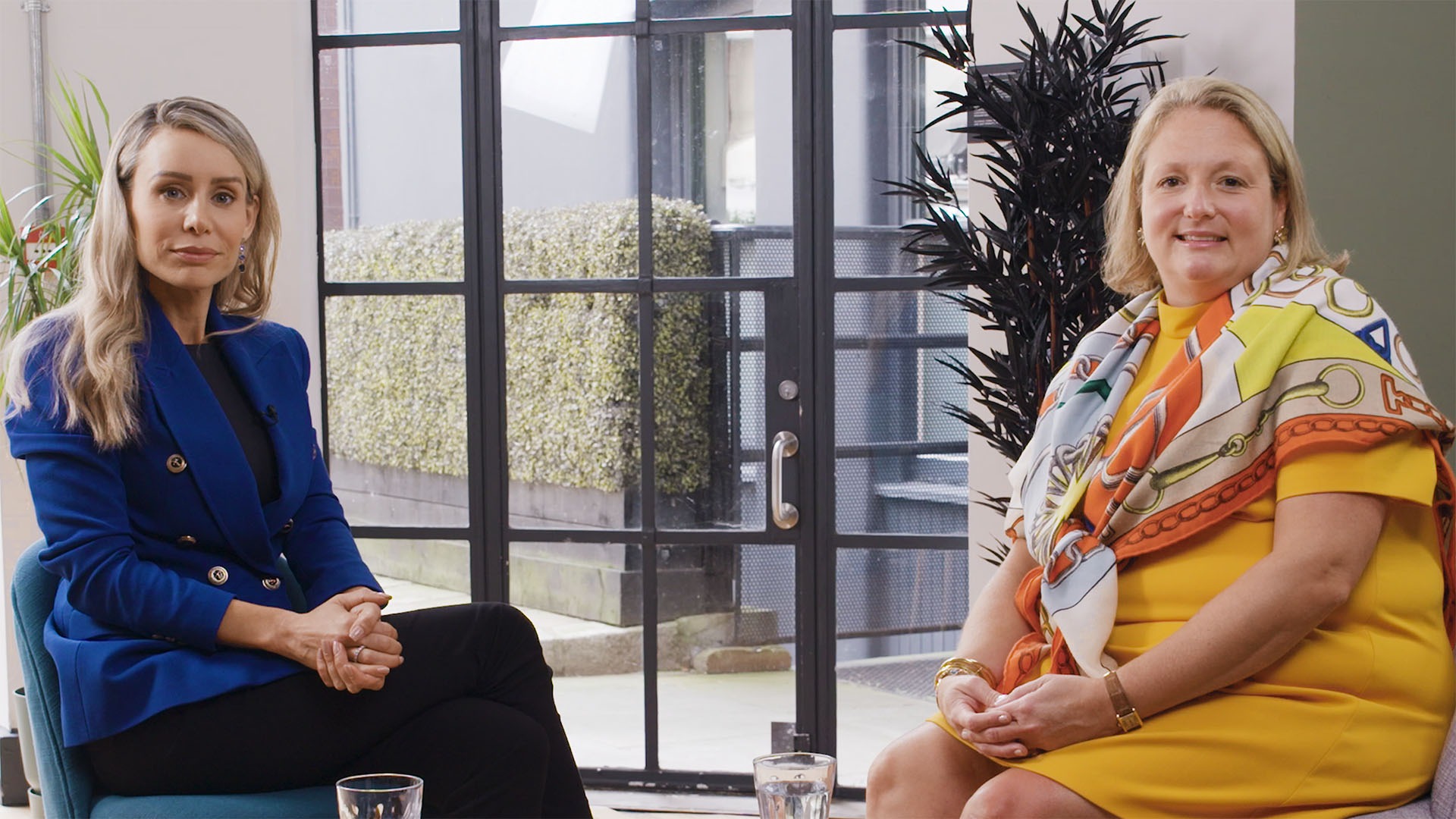
Joseph von Maltzahn, JLL head of private wealth for Capital Markets, EMEA (left); David Green-Morgan, senior adviser, JLL Capital Markets research, APAC