
Redefining female leadership in family offices
Sreepriya NS

If you walked into an Indian family boardrooms a decade ago, you would find a familiar picture of men debating investments, tax strategies and business legacies, while the women of the family were often confined to philanthropy or cultural affairs.
It is of course the mother’s role in every family to ensure the value system is passed on to the children in the right way at the right time. But when it comes to financial matters, it is typically the husband who takes the lead — a natural division of labour between them.
Fast forward to today, and the picture looks refreshingly different. Daughters are sitting on investment committees, mothers are heading governance councils, and female leaders are driving conversations about diversification, risk and succession.
Industry surveys show women account for nearly one-third of next-gen leaders in family offices globally, a number that is steadily climbing.
This is not tokenism; it’s a structural shift. Women are not just entering family offices — they are changing how they operate.
Empathy meets strategy
Family offices are unlike any other wealth management entity because money and emotions are always intertwined. In India, where families are deeply interconnected, this complexity is even more pronounced.
Here’s a small story: a Delhi-based family office recently faced a generational divide. The sons were eager to plunge into high-growth start-ups, while their father preferred steady assets like real estate. It was the daughter, armed with both a business degree and a strong sense of family dynamics, who stepped in. Instead of pushing numbers, she created a series of roundtable conversations where each voice was heard. The final portfolio split capital between stability and growth, satisfying both camps, and avoiding a rift that could have easily spiralled.
Even if they were not in the forefront earlier, women were always there as the chief emotional officer in every family. And now, we see more and more daughters being entrusted with the steering wheel
That’s the power of empathy and foresight — two qualities that women often bring to the table. They don’t just ask, “Is this the right investment?” They also ask: “Will this keep us aligned as a family?”
Even if they were not in the forefront earlier, women were always there as the chief emotional officer in every family. And now, we see more and more daughters being entrusted with the steering wheel.
New leadership styles
Think of Roshni Nadar Malhotra, who became the first woman to chair a listed IT company in India, HCL Technologies, and oversees the family’s philanthropic and wealth decisions. Or Nisaba Godrej, who has reshaped Godrej Consumer Products with a sharper focus on sustainability and governance. Their leadership styles are echoed in how many next-gen women are approaching family office roles. All are strategic, values-driven and forward-looking.
These women are not just entering boardrooms. They are resetting the agenda inside them.
One of the trickiest parts of Indian family offices is governance. Boundaries between business, personal wealth and legacy often blur, and that’s where disputes begin. Women leaders tend to approach governance differently — not as bureaucracy, but to keep things transparent and ethical.
I know of a Mumbai-based family where the matriarch set up quarterly ‘family forums’. These meetings, modelled on board reviews, became a space to openly discuss investments, philanthropy. and even potential disputes. The difference? There were minutes, action points. and accountability. What started as an experiment is now a practice that keeps three generations aligned.
When women lead, governance isn’t just about control, it’s about clarity.
More balance, less adrenaline
It’s no secret that Indian entrepreneurs, especially first-gen wealth creators, often carry a risk-taking streak. But family wealth is about balance, not adrenaline. And women leaders often bring that steadiness. They know that wilful ignorance is certainly not an option. Education and awareness is the key.
During the Covid-19 pandemic, a Hyderabad family office faced pressure to chase short-term gains in volatile markets. Their female leader resisted the frenzy. She diversified into renewable energy, healthcare and education — sectors that carried both resilience and alignment with the family’s values. Three years later, those bets are paying off steadily, while many peers are still recovering from speculative losses.
That’s the hallmark of women-led wealth management: a pragmatic balance between growth and preservation.
Rethinking succession in India
Perhaps the most significant shift women are driving is in succession planning. For generations, Indian families defaulted to passing the baton to the eldest son. That script is changing.
During a recent meeting with a Chennai-based client, the matriarch deliberately involved both her son and daughter in the family office early on. Each was asked to shadow different verticals, from investments to philanthropy. By the time succession discussions came up, it was no longer about who deserved to lead. It became about how they could lead together.
This inclusivity not only ensures smoother transitions but also sends a powerful message: leadership is about capability, not gender.
Inclusivity not only ensures smoother transitions but also sends a powerful message: leadership is about capability, not gender
India is home to nearly a thousand ultra-wealthy families today, and the number is growing every year. With that growth comes the need for family offices that are professional, resilient and future-ready. Women leaders are uniquely positioned to meet that need.
They bring empathy into tough conversations, transparency into governance, balance into risk-taking, and inclusivity into succession. And perhaps most importantly, they redefine wealth — not as an inheritance to guard jealously, but as a legacy to grow responsibly and share meaningfully.
The quiet shift of women stepping into Indian family office leadership is not just a gender milestone. It’s a transformation in how wealth is stewarded, one that blends heart with strategy, and foresight with fairness. In fact, we need gender diversification when it comes to complex processes like estate planning, where both spouses are involved, to balance the decision-making.
In many ways, the future of Indian family offices looks set to wear a more human face. And very often, that face will be a woman’s.
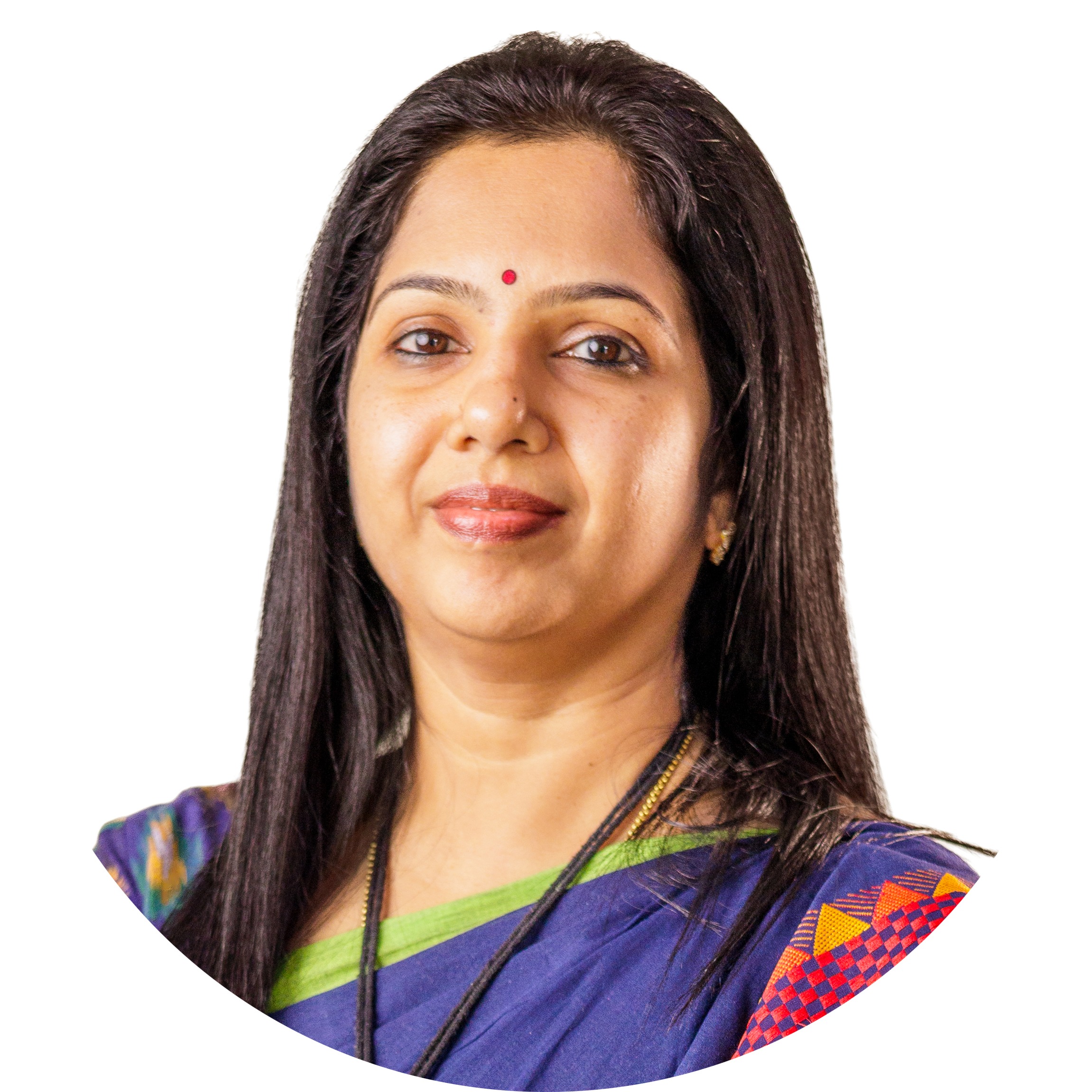
Sreepriya NS, CEO, Entrust Family Office